Iñaki Urdangarin, the Duke of Palma and King Juan Carlos’ son-in-law, may have properties embargoed after failing to pay his part of 8.2 million in bail connected to the corruption investigation against him.
With the situation deteriorating, the community of Palma De Mallorca removed street signs in honor of the Duke and his wife, Infanta Cristina.
Meanwhile, other members of the Royal Family are working to continue their duties and show their worth to the Spanish people.
King Juan Carlos has been meeting with delegations at Zarzuela Palace. He also welcomed new ambassadors this week at the Royal Palace in Madrid.
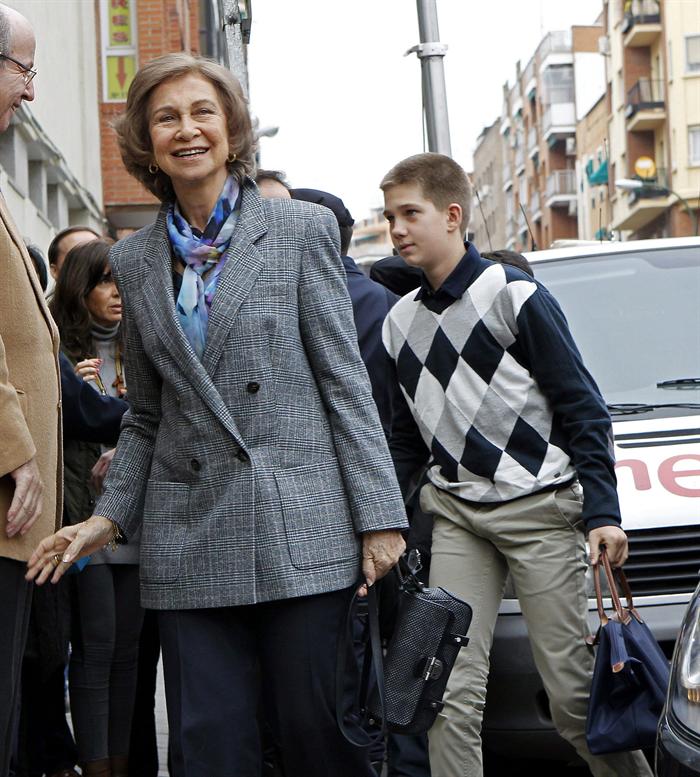
Queen Sofia paid a visit to the National Center for Biotechnology this week, as well.
And Prince Felipe officially retired the Prince of Asturias aircraft carrier.
King Juan Carlos met this week with Catalonian President Artur Mas, who is pursuing a referendum on whether to declare independence from Spain.
Little news came of the highly anticipated meeting, where Mas was to present the King with his plans. Don Juan Carlos has spoken out against pro-sovereignty moves.
Media sources noted that the King was serious when receiving the autonomic leader. The two spoke for about 45 minutes.
King Juan Carlos, amid an ongoing effort to improve Spain’s brand abroad, especially amid a brutal recession, hosted members of the diplomatic corps at the Royal Palace in Madrid this week.
The King expressed support for Spain becoming a non-permanent member of the United Nations Security Council. He also called for closer ties between European counties, and warned against blaming any one nation for the economic crisis.
“The world is increasingly complex and competitive,” the King said.
King Juan Carlos has also been meeting with newly-elected heads of different autonomous regions.
Upcoming is a much-anticipated meeting with Catalan President Artur Mas, who is expected to present His Majesty with a proposal for a referendum on independence.
Meeting with Iñigo Urkullu Rentería, Lehendakari of the Basque Country.
The Royal Household also announced King Juan Carlos’ planned visit to Morocco. The King is close to the Moroccan monarch despite occasional tensions over Spanish enclaves in North Africa.
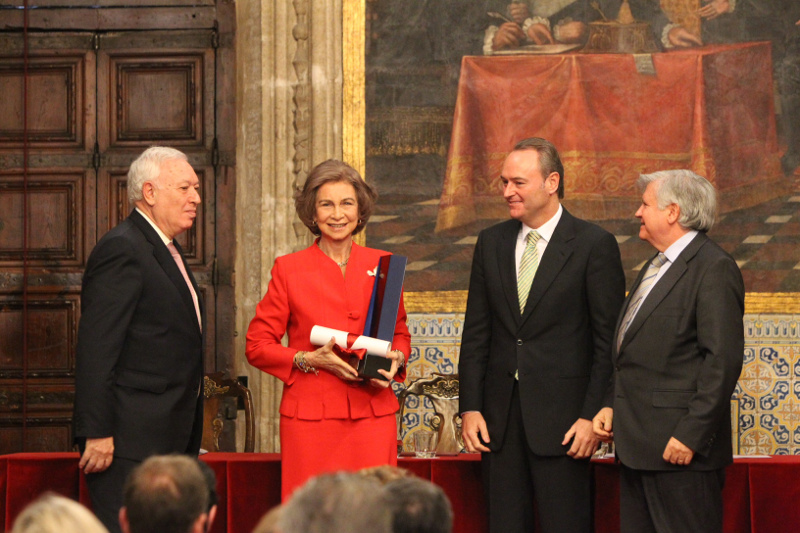
This week the Broseta Foundation awarded Queen Sofia its prize for coexistence. The group touted her social welfare efforts, her support for Democracy and her work for the development of Spain.
Spanish Defense Minister Pedro Morenés alluded to the military’s role amid pro-independence rumblings in Catalonia, saying the armed forces will not respond to provocations and will quietly perform their duty.
The comments are an allusion to concerns that the military may want to violate Democrats institutions and get involved in any political crisis, or prevent secession.
The remarks were part of the “Pascua Militar,” an annual event at the Royal Palace in Madrid where the Royal Family and Spain’s leadership recognize military accomplishments and talk about priorities.
King Juan Carlos thanked members of the armed forces for their work at home, including helping with recent fires, and abroad, including service in Afghanistan. He said the military was also part of improving the country’s economy.
King Juan Carlos rejected any suggestion of possible abdication during an interview on Spanish Television tonight marking his 75th birthday tomorrow.
The King said, “I am doing well and wish to continue” with the duties of Head of State.
Asked about his legacy, His Majesty said,” I don’t like to talk about myself.” But expressed pride in having helped unite “all Spaniards” and accomplished his duty to restore Democracy and the Crown.
King Juan Carlos and Queen Sofia with U.S. President Ronald Reagan and First Lady Nancy Reagan.
Of course, Spain remains divided, especially with regions like Catalonia discussing whether to seek independence. The King reiterated his distaste for the politics of “intransigence” and division.
He called the current generation one “of liberty,” but said Spain still had to work on becoming a more equal and fair society. He wants the country to be united behind “one future and one idea.”
“To me it hurts me a lot,” the King said about people having to leave Spain to find work amid a tough recession.
The interview was never expected to generate controversy of bring about tough questions. Still, commentators quickly said it could have been less formal, allowing for the King’s jovial personality to come through.
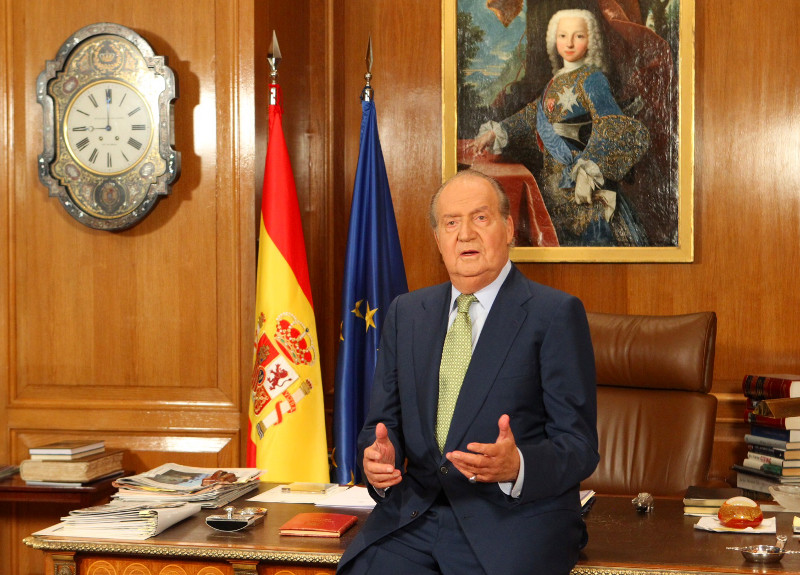
King Juan Carlos called for unity and confidence during his Christmas Eve message, an annual tradition that allows the Monarch to speak at length about ongoing problems.
This year’s speech from his office at Zarzuela Palace was notable because it comes amid a secessionist push in Catalonia, ongoing Basque nationalism and a troubled economy.
It’s also the first year the King’s Christmas message is broadcast on YouTube and available in the different languages under the Spanish Crown.
The King said these were “among the toughest moments in recent Spanish history.” Speaking about the economy and politics, he said, “We cannot ignore than pessimism exists.”
Amid ongoing concerns about layoffs and spending cuts, the King said, “Austerity and growth must be compatible.”
Recalling the many tough times lived by Spaniards in the past, he added, “The first stimulus that will get us out of this crisis is confidence.”
His Majesty, treading carefully around the secession issue, he called on politicians to seek policies that unite rather than divide.
Amid concerns about the viability of the Spanish state as it currently stands, King Juan Carlos called Spain a “great nation” that must be part of global solution to economic and social concerns.
The King recognized the plurality of languages, cultures and traditions that have coexisted within Spain for centuries.
“Its necessary to promote values like mutual respect and reciprocal loyalty,” he said, hoping that politicians “do what’s possible to close open wounds.”
Doctors have given King Juan Carlos the all-clear to leave the hospital today after recovering from hip surgery, one of several in recent years. His Majesty will be less visible in the coming days because of ongoing recovery.
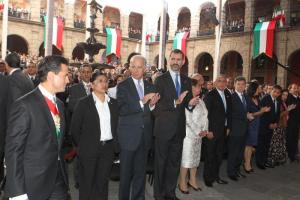
Meanwhile, this weekend Prince Felipe traveled to Mexico to attend the installation ceremonies for the country’s new President Enrique Peña Nieto and meet with outgoing President Felipe Calderón.
The Prince of Asturias is, by Royal Decree, Spain’s official representative at the swearings-in of Ibero-American leaders.
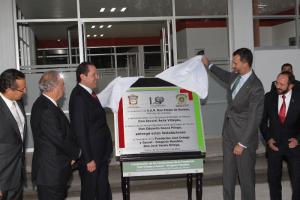
While in Mexico, Prince Felipe also met with local leaders and inaugurated a branch of the Fundación José Ortega y Gasset-Gregorio Marañón at Mexico’s Universidad Autónoma.
The foundation has several branches around the world. It honors well known Spanish scholars and is dedicated ti study and research in the field of humanities.
Iñaki Urdangarin, the Duke of Palma and Infanta Cristina’s husband, visited King Juan Carlos today along with other members of the Spanish Royal Family at Quirón San José Hospital in Madrid.
His Majesty was recovering from a previously scheduled hip surgery.
It was the first time, media reports indicated, since the King had met with his son-in-law since he became embroiled in a high profile corruption scandal. Infanta Cristina is said to have orchestrated the visit.
The visit also came just days after prosecutors asked a judge to approve roughly 4 million euro in bond for the Duke. They accuse him of stealing public funds along with his partner while heading the non-profit Noós Institute.
King Juan Carlos’ sisters, Infantas Pilar and Margarita, also visited him at the hospital.
Click here for video and coverage from Spanish Television.
King Juan Carlos is — using his own words — going back into to the shop. Doctors will soon perform yet another hip surgery on the Monarch, who has had difficulty walking.
Don Juan Carlos went under the knife earlier this year after his fall in Botswana. This time, however, doctors will treat his left hip.
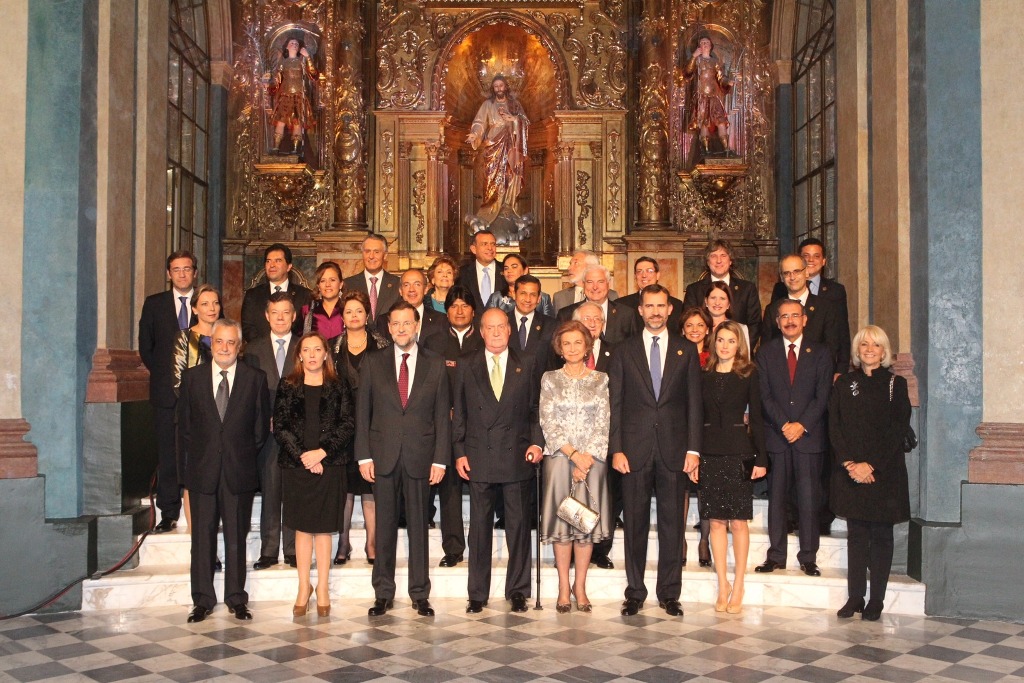
The King said he delayed the surgery to make room for this weekend’s Cádiz Summit of Ibero-American heads of state and government. His Majesty has been deeply involved in hosting the event.
“Without a doubt the Cádiz Constitution provided the seed for ideas of liberty that influence so many European and American constitutions,” the King said speaking about the short-lived but important 1812 document.
Don Juan Carlos also spoke about the economic and social progress being made by many Latin American countries in contrast with the pain in Europe.
“Our sights are on you,” he told the leaders assembled. “You have made great efforts to be where you are and we can’t but recognize it and look for shared experiences.”
The King has made wooing Latin America a pillar of his agenda to help the Spanish economy. He recently toured several countries there, and today hosted a Royal Palace lunch for Brazilian President Dilma Rousseff.
His Majesty awarded President Rousseff the Collar of Isabella the Catholic, Spain’s highest honor. And he encouraged Brazilian companies to invest in Spain.
The next Ibero-American summit will be in Panama. This year’s may be the last one hosted by King Juan Carlos in Spain.







 LOS BORBONES