King Juan Carlos called for unity during his customary Christmas message amid efforts by Catalan separatists to increase the region’s autonomy or become independent.
The King said the Constitution of 1978 has provided the country with its most stable period of liberty, something citizens must recognize.
At the same time, he appeared to empathize with those who believe more changes are necessary.
“I am convinced that all these questions can be resolved with realism, effort, the rule of law and the generosity of political and social forces,” said the King.
Talking about the restoration of Democracy and the current Constitutional order, His Majesty said, “Highlighting this historical achievement is not incompatible with recognizing, as I have just said, with the need to improve many aspects of the quality of our Democracy.”
He went on, “The Crown promotes and welcomes this national model. It believes in a free, fair and united country within its diversity. It believes in an open Spain where we all fit. And it believes in the Spain that we must all continue building.”
Don Juan Carlos also took time to recognize the ongoing economic crisis, note those who have left to work abroad, and the extended families who are pooling their resources to make ends meet.
It seems that King Juan Carlos is fond of texting public officials in a jovial manner.
Joan Mesquida, former director general of the Spanish Civil Guard and former tourism chief, got a text from the King during a recent radio broadcast, according to El País.
So Mesquida went on the explain that the King not only texts, but is also quick to pick up the phone or return phone calls.
Don Juan Carlos is still recovering from his recent operation.
Other members of the Royal Family, meanwhile, have remained active.
It should not come as a surprise that Queen Sofia, a big sports fan and a booster of Spanish athletes, took some time to see Rafael Nadal win the US Open.
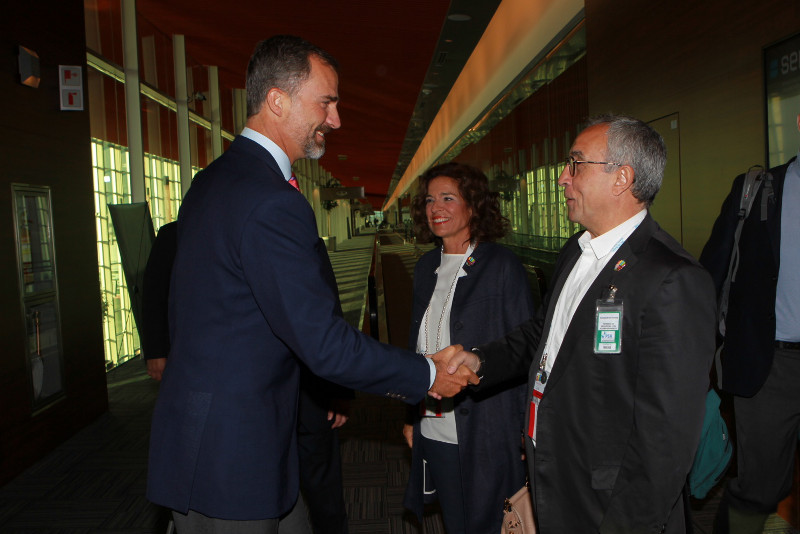
Prince Felipe arrived in Buenos Aires this week to help boost Madrid’s chances of becoming the Olympic host city for 2020.
His Royal Highness, the Prince of Asturias, is the honorary head of Madrid’s delegation, has been assisting rehearsals and will be on hand for the city’s presentation over the weekend before the International Olympic Committee.
Gossip about the Royal Family continues amid the ongoing corruption investigation surrounding the Duke of Palma, the King’s son-in-law.
Media outlets reported this week that Don Juan Carlos loaned his daughter, Infanta Cristina, Duchess of Palma, more than 1 million euros to buy a mansion in Barcelona.
Queen Sofia today visited a food bank in Palma de Mallorca in the Balearic Islands where she proposed collecting items from the increasing number of cruise ships that dock.
King Juan Carlos and Queen Sofia immediately deployed this week to the Santiago de Compostela area in the Galicia region to comfort victims of the high speed train derailment, which killed dozens of people.
Both monarchs have a relatively close relationship, even if both countries sometimes disagree over immigration issues and Spain’s North African enclaves of Melilla and Ceuta.
In the mid 1970s Prince Juan Carlos, acting as Head of State near the death of dictator Francisco Franco, decided against fighting Moroccans over the territory now known as Western Sahara.
His Majesty has been relatively busy in recent weeks. Last week he presided over a meeting of the newly-reformed National Security Council.
Meeting at Zarzuela Palace.
Queen Sofia, meanwhile, was in Asturias today for a tourism promotion trip. She also encountered protests from miners, upset about recent cuts in subsidies.
King Juan Carlos and his family have a number of Royal Palaces, sites and homes at their disposition.
In practice, however, they only use a fraction of them on a regular basis, and mostly for official occasions. Below is a non-exhaustive list:
Photo by Manuel Quinones.
The Madrid Royal Palace, above, is the King’s official residence and site for the most important state gatherings.
It has a large dining room, numerous works of art, an armory with historic weapons belonging to members of the Royal Family, and the official Throne Room.
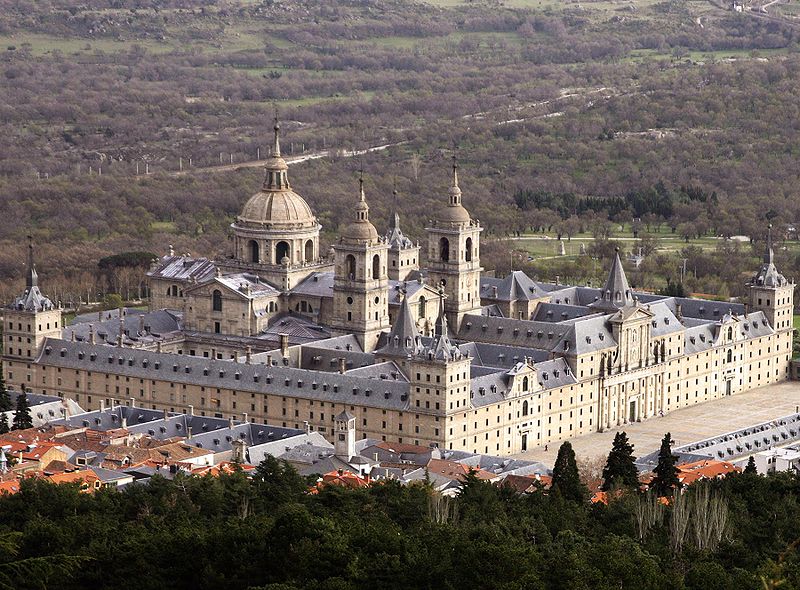
Royal Site of San Lorenzo del Escorial.
The Royal Site of San Lorenzo del Escorial is a large palace and monastery in the Madrid region, which includes a tapestry museum, a library, a basilica and the official burial place for members of the Spanish Royal Family.
On the grounds is a small house called La Casita del Principe for the Prince of Asturias, the heir to the Spanish throne.
Nearby is the Valley of the Fallen, resting place for former Dictator Francisco Franco.
Prince Felipe and his wife Princess Letizia, however, currently live in a newly built small palace often called the Prince’s Pavilion, pictured below.
The Prince’s house is a short drive from Zarzuela Palace, where King Juan Carlos and Queen Sofia have lived for several decades.
Former Franco rehabilitated Zarzuela, an old royal hunting lodge, for the young couple. They moved in in shortly after their wedding in Athens, when their future as heirs to the Spanish throne was still uncertain.
Welcoming guests at Zarzuela Palace.
The King and other members of the Royal Family often receive informal visits at Zarzuela, which is equipped with communications capabilities and contains Royal Household offices in support of the Monarch as the Head of State.
The King’s dispatch is at Zarzuela with his official Royal Standard flying above. Queen Sofia’s sister, Princess Irene of Greece, also lives on the site.
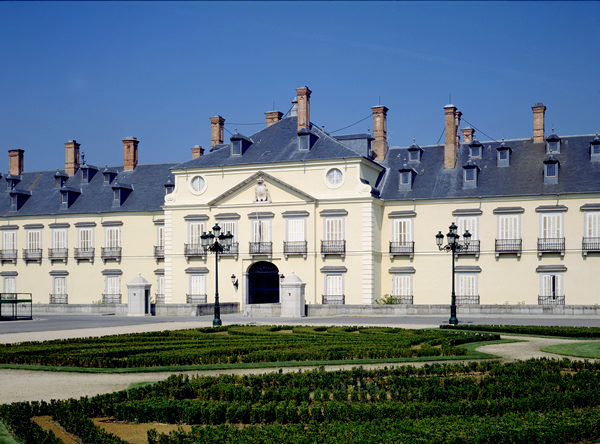
The Zarzuela Palace, also outside of central Madrid, is in the grounds of El Pardo Palace, pictured above. Franco used to live at El Pardo, which now includes reception rooms and apartments for guests.
Most Royal Palaces and sites, which include monasteries and gardens, are owned by the state and run by Patrimonio Nacional or National Heritage.
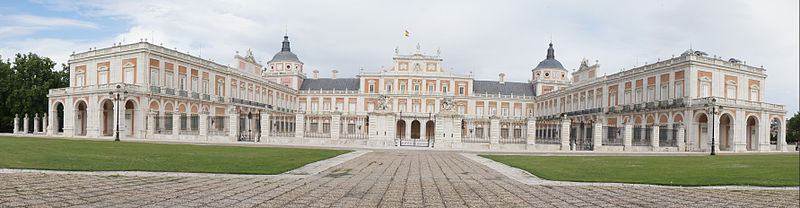
Also in the Madrid region, but to the south, is the Royal Palace of Aranjuez, pictured below.
Several Royal sites are located in the Segovia area, north of Madrid.
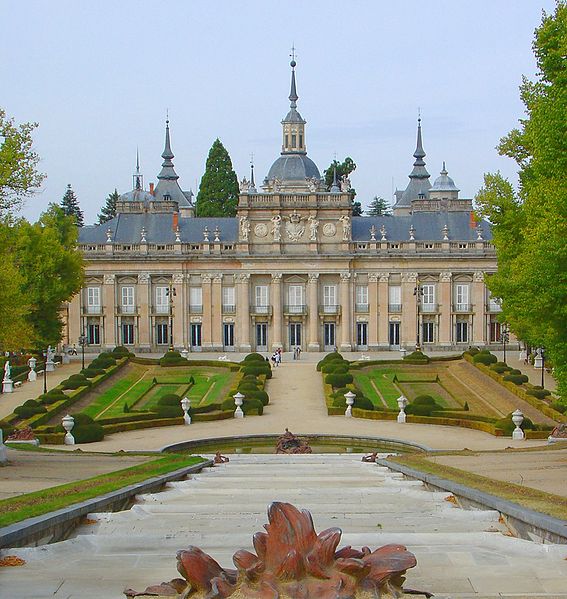
The Gardens of La Granja de San Idelfonso, above, extend more then 1,000 acres. The Riofrio Palace, below, was built for Queen Elisabeth Farnese in the 1700’s but has generally been barely used.
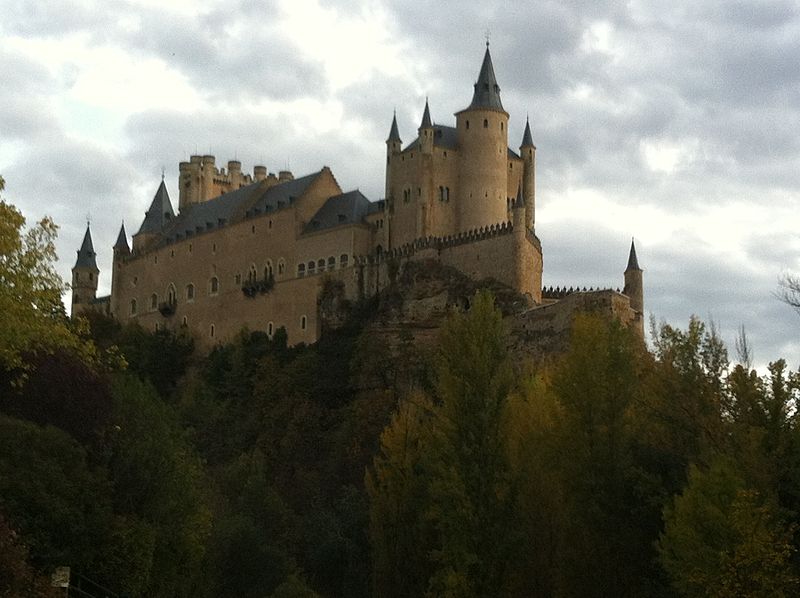
Also in Segovia is the Alcazar de Segovia, which was used by Queen Isabella of Castile. It is run by a patronage and one of several castles that were once royal homes are now museums.
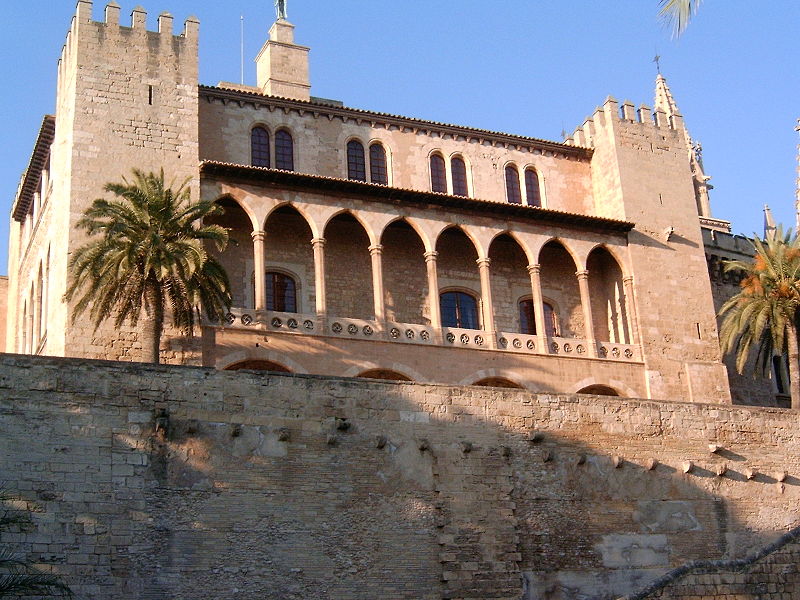
The King’s official residence in Barcelona is owned by the local government. The same goes for the Royal Family’s summer residence in the Balearic Islands, Marivent Palace in Palma de Mallorca.
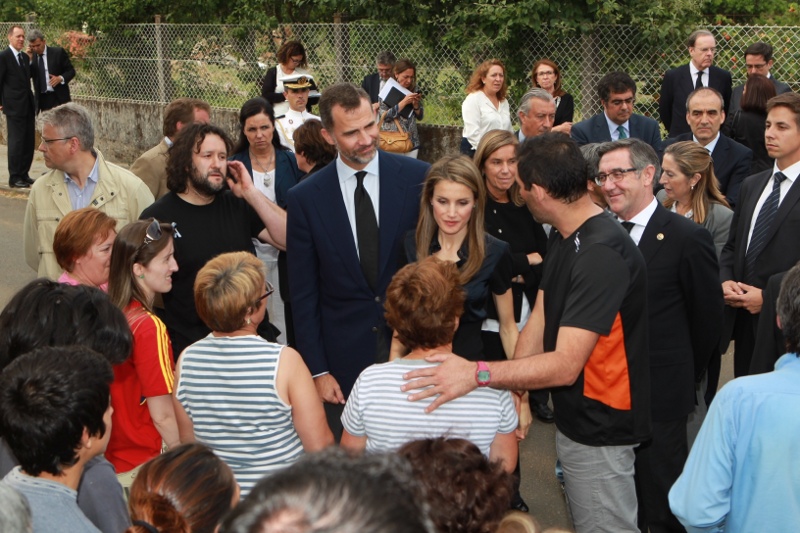
Clinton also met with Prince Felipe, while both attended the summit at Madrid’s European University.
His Royal Highness said, “Governments and public institutions have the responsibility to create policies that favor stable job creation.”
Prince Felipe and President Clinton at the summit.
Don Felipe added, “Universities and educational centers must mold youth so they have the skills necessary to get jobs, and companies should offer opportunities for professional growth.”













 LOS BORBONES