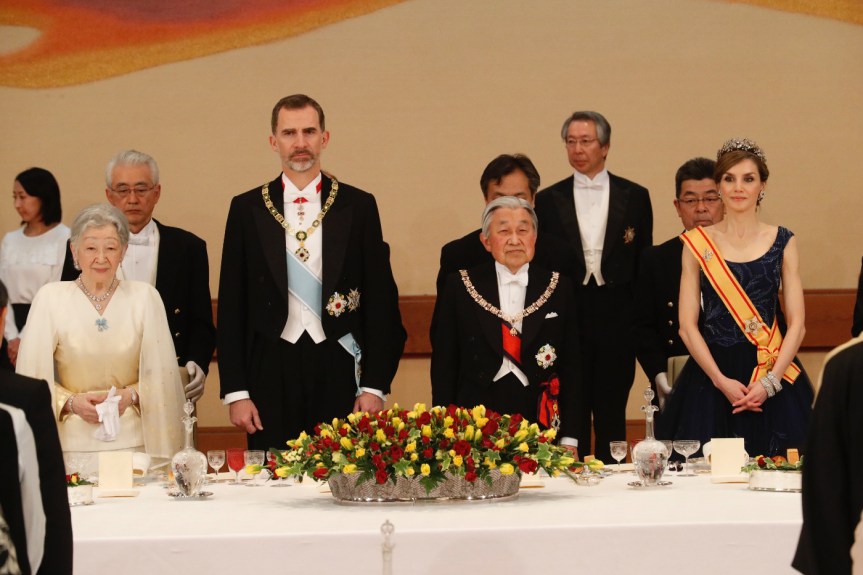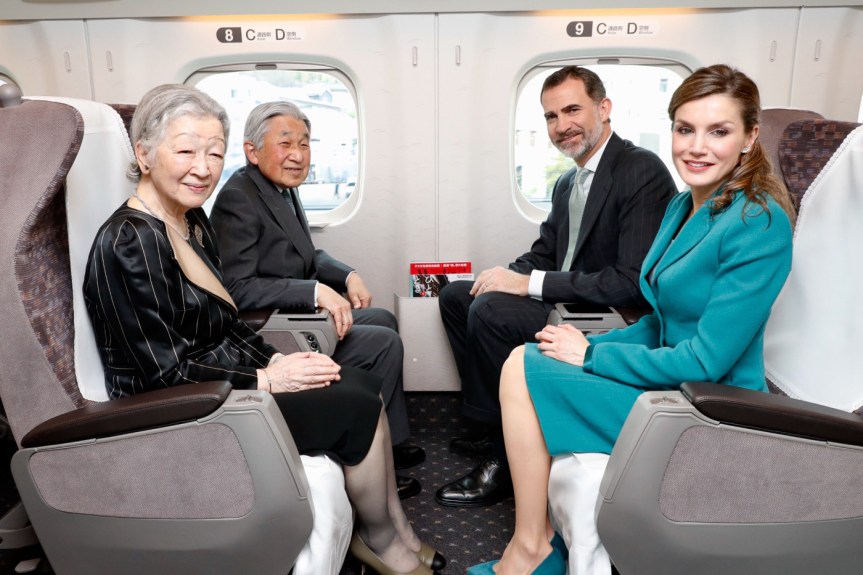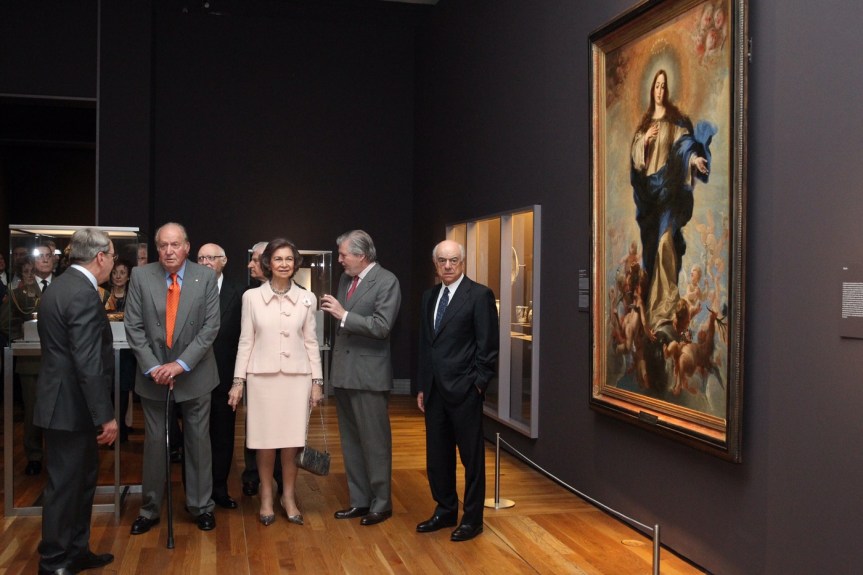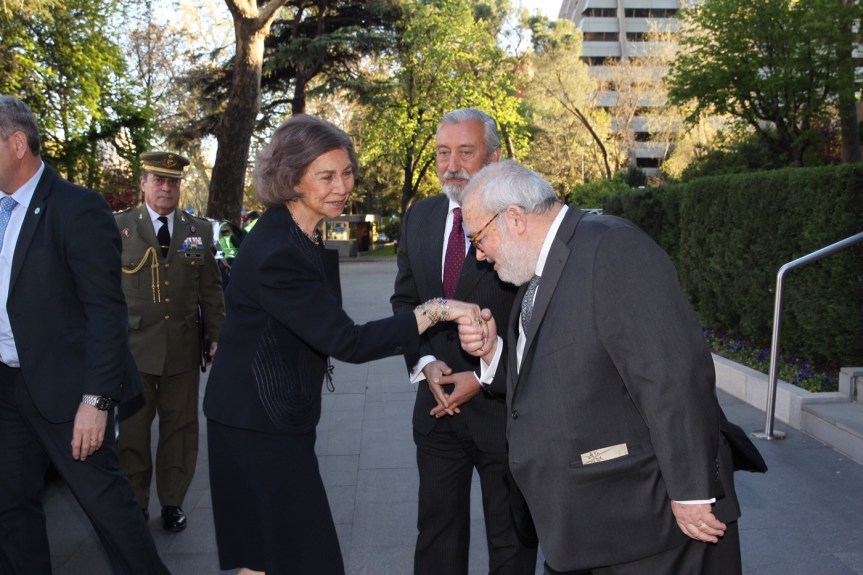
Queen Letizia did something rare and notable this week.
Even though Her Majesty usually doesn’t wear tiaras or has preferred smaller ones, she wore one of the larger pieces in the royal collection for a state dinner for Argentina’s new president and first lady.
Separately, a Palma de Mallorca court is not making King Felipe’s brother in law Iñaki Urdangarin report to prison following his corruption and fraud conviction. A long appeals process is likely.
A Palma de Mallorca court has absolved Infanta Cristina, King Felipe’s sister, of fraud and corruption charges today.
Her husband, Iñaki Urdangarin, the former Duke of Palma, may go to jail for more than six years.
At issue is a long-running case dealing with a group Urdangarin lead. Authorities accuse him of enriching himself through lucrative government contracts.
Even though the court absolved the infanta, King Juan Carlos’ daughter and former Duchess of Palma, she must pay a so-called civil responsibility.
The King and Queen Letizia continued with their schedule as usual. The Royal Household has expressed confidence in the justice system.
King Felipe’s father, King Juan Carlos, was the first head of state to visit President Obama at the White House. But Spain has said little about Trump.
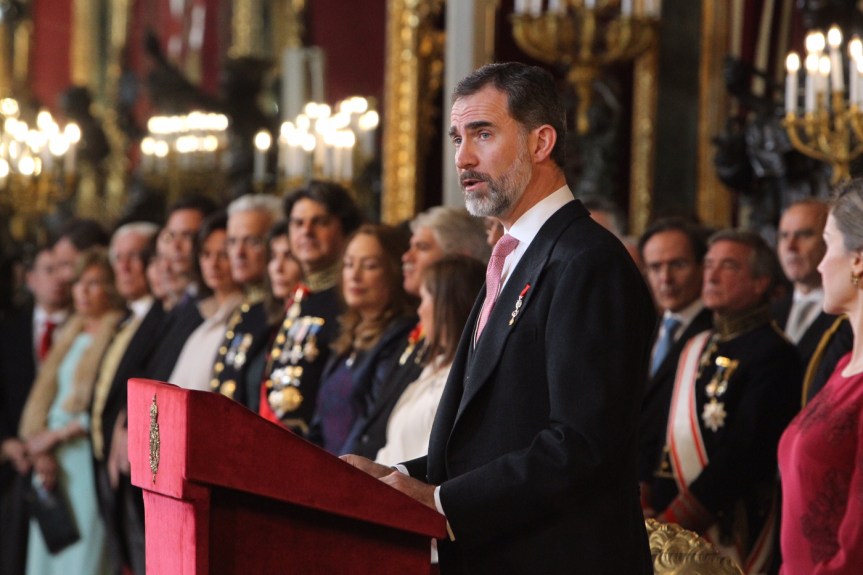
During a reception at the Royal Palace in Madrid for the diplomatic corps last month, the King said, “It is our desire to continue working with the new administration at the same level of excellence that we have done until now.”
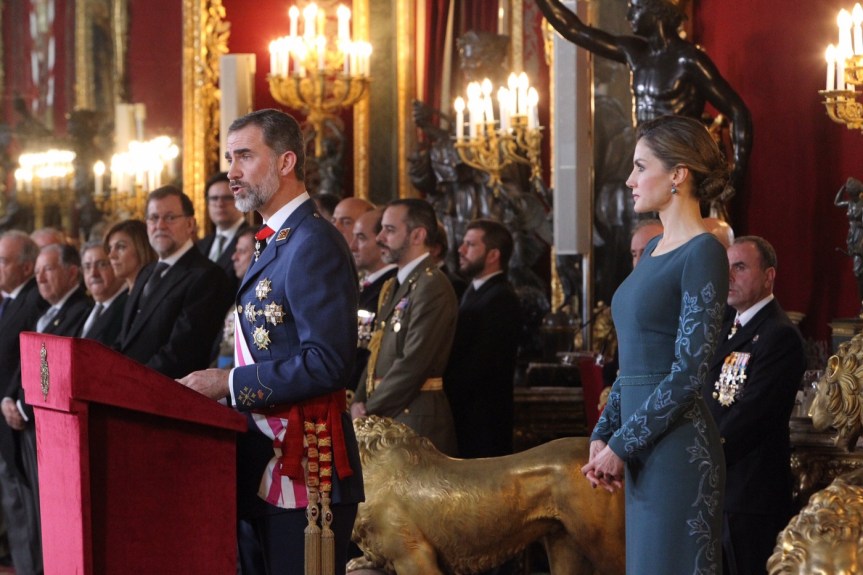
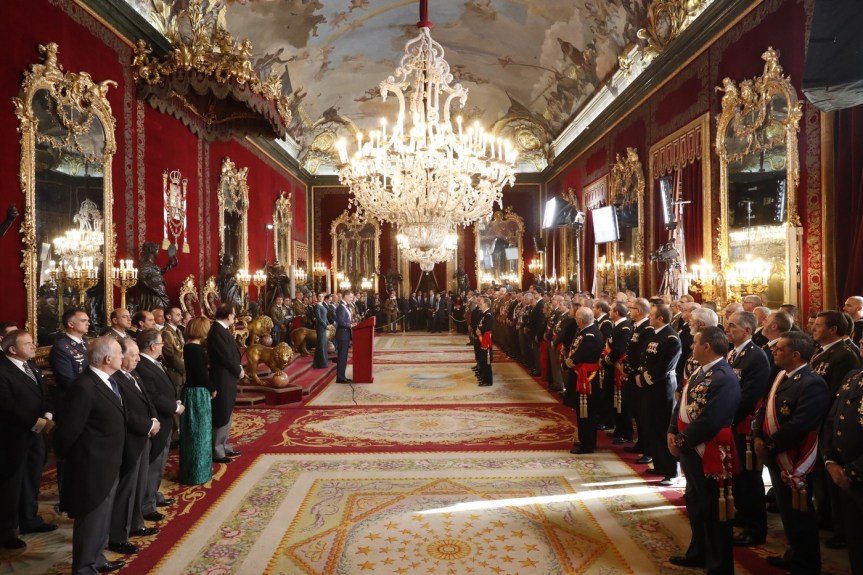
The King spoke in the Throne Room. The reception was nearby in the stately Hall of Columns.
On Europe, His Majesty said, “We are aware that the European project is being put into question” but he pointed to EU actions to address the financial crisis. “It’s time for a better Europe, not to undo the good we have built or to turn back.”
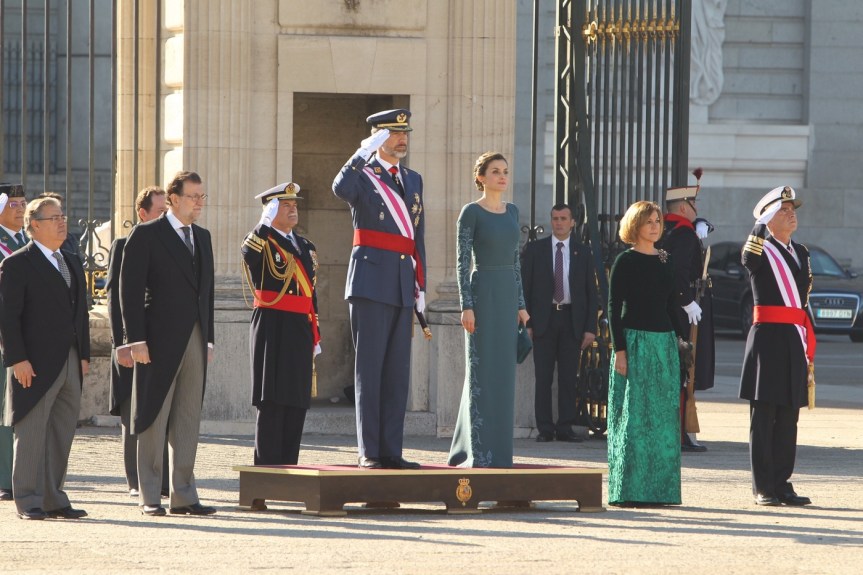
King Felipe and Queen Letizia launched their agenda for the new year with the deeply traditional “Pascua Militar” events at the Royal Palace in Madrid.
King Felipe dedicated his annual Christmas message to urging Spaniards to be more positive and resolute, and to work together toward a more prosperous future.
The King recognized country’s economic crisis and political difficulties, but also pleaded with Spaniards to focus on the nation’s growth and unity.
Don Felipe’s words were relatively forceful. “Intolerance and exclusion, the negation of the other or disrespect for another’s opinion, don’t fit in today’s Spain,” he said.
Like previous years, the King also alluded — albeit indirectly — to nationalist movements in Catalonia and the Basque Country.
“Breaking the norms that guarantee our democracy and liberty only leads to tensions and sterile clashes that don’t resolve anything, and to the moral and material worsening of the society,” he said.
Mainstream parties welcomed the King’s message. Populist party Podemos accused the monarch of not listening to his people.
Many Spaniards tend to be pessimistic about their country, even amid the recovery. Nationalist movements have also flared, particularly since the empire’s fall.
King Felipe — caretaker of the country’s unity, according to the constitution — has been using his bully pulpit to reverse those social trends.