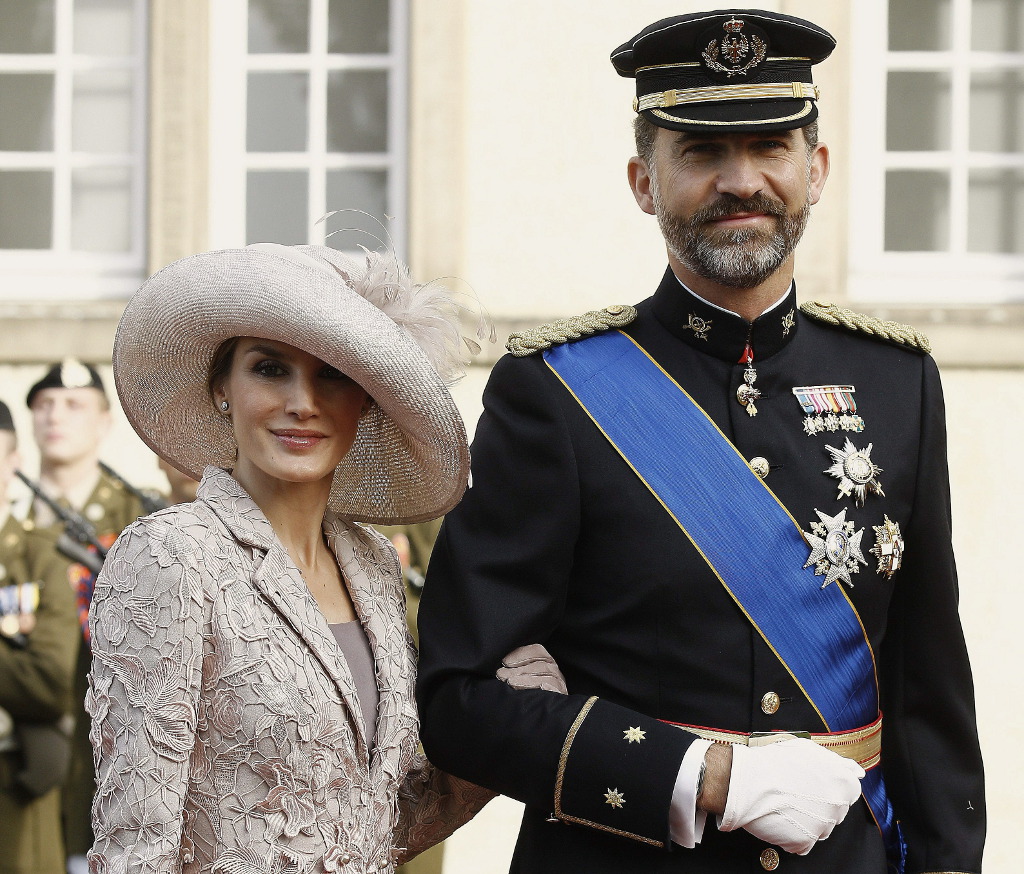
Prince Felipe and Princess Letizia were in Luxembourg this weekend attending the wedding of Prince Guillaume of Luxembourg and Belgian Countess Stephanie de Lannoy.
Their Royal Highnesses joined royals from around the world, including Japan. The wedding is being called the most significant royal event in Luxembourg in three decades.
Queen Sofia has spent much of the week crisscrossing the South American nation of Bolivia, a source of immense mineral wealth for Spain during imperial times.
Queen Sofia with indigenous Bolivians and in local clothes.
Her Majesty met with Bolivian President Evo Morales, who thanked the Queen for Spain’s efforts at helping his country.
The two also signed an agreement aimed at resolving the controversy over the discovery of coins from a sunken Spanish ship. Spain went to court to obtain possession of the valuable treasure.
But because the coins were minted in the imperial mining city of Potosí, Spain will allow Bolivia to host its own display of the find.
Morales, known as one of Latin America’s most outspoken advocates of indigenous rights, greeted the Spanish Monarch with warmth.
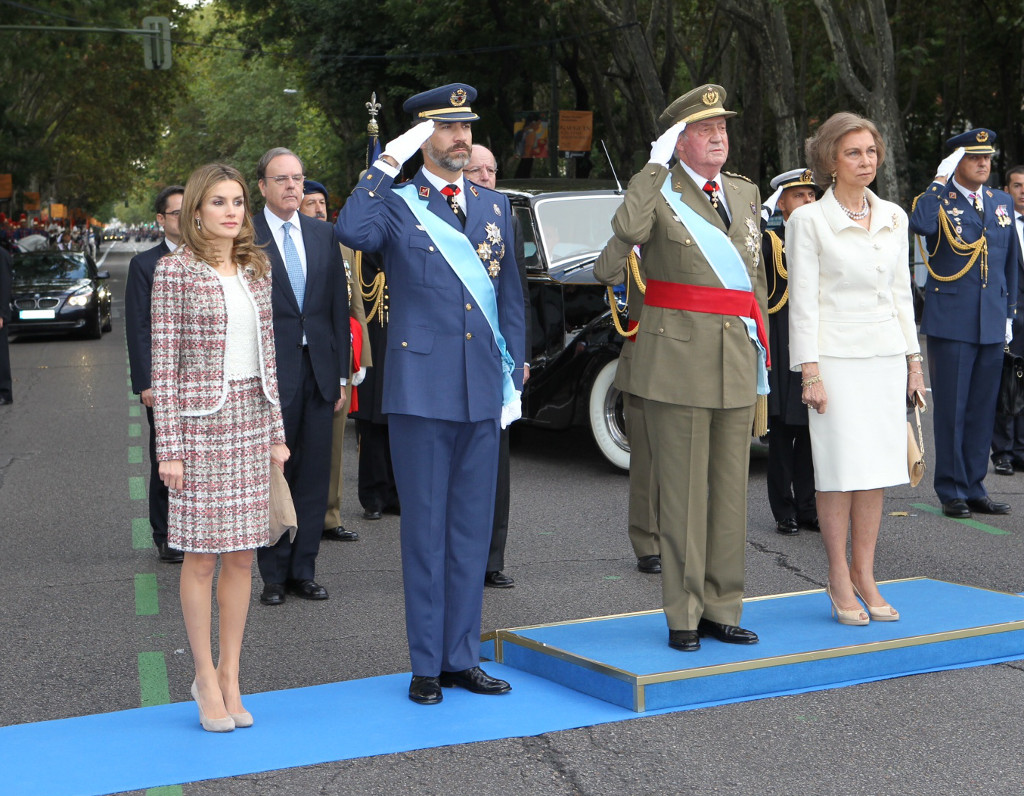
King Juan Carlos was seen chatting with Prime Minister Mariano Rajoy during the parade. Media outlets are reporting that the King criticized the education minister’s comments in favor of making Catalonian children more Spanish.
Amid talks of independence in that autonomous community, Prince Felipe told journalists that he is not worried about Catalonia and that the Crown would continue its commitment to all Spaniards.
At the Royal Palace, however, King Juan Carlos joked with journalists instead of talking about the Catalonian situation.
Also of note, Infanta Elena was not with other members of the Royal Family during many of the ceremonies.
The Royal Household told media outlets that only the the King, Queen and the heirs to the throne would be included in the main stand from now on.
“The time had to come,” Infanta Elena told reporters. She will continue to represent the Royal Family at official events.
The Infantas have usually been close to their father during important events, but things have changed amid Infanta Cristina’s absence from the family’s public affairs because of her husband’s corruption probe.
King Juan Carlos’ son-in-law, the Duke of Palma, Iñaki Urdangarín, has resigned from an advisory and leadership post at Telefónica Brasil, numerous media outlets are reporting.
Infranta Cristina’s husband is embroiled in a corruption probe, with prosecutors accusing him of using a non-profit he helped lead for private gain.
Earlier this year, Urdangarín announced he was taking a leave from his post at Spanish multinational Telefónica. As a result, the couple moved back to Spain full-time and left their Washington, D.C. area home.
The Duke and Duchess, which have not been participating in official events, are also not expected to be at the upcoming Hispanic Day activities.
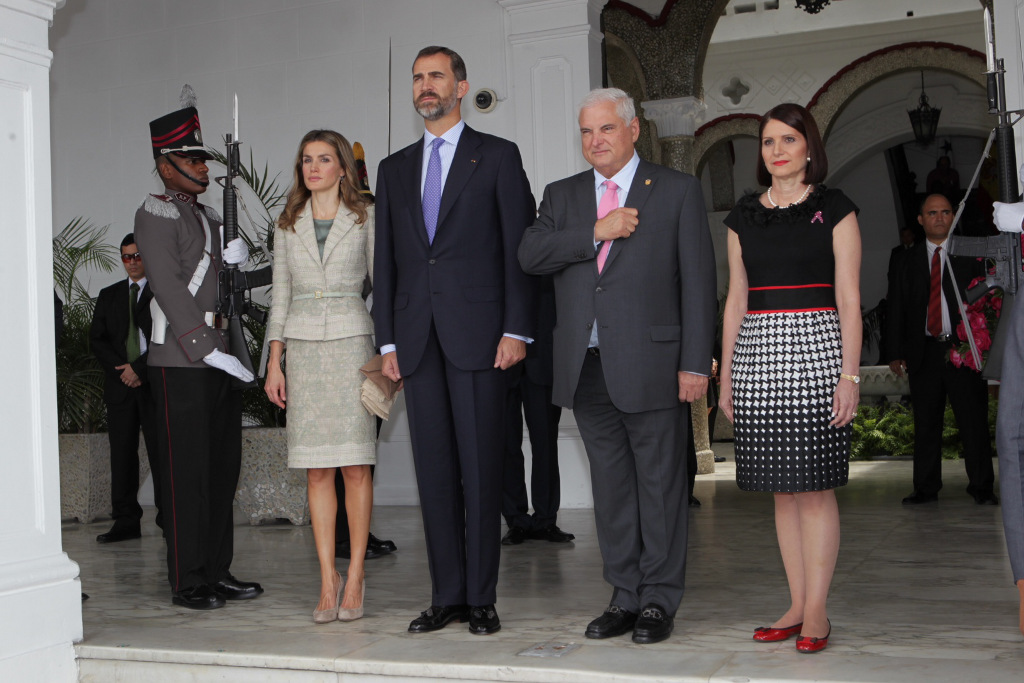
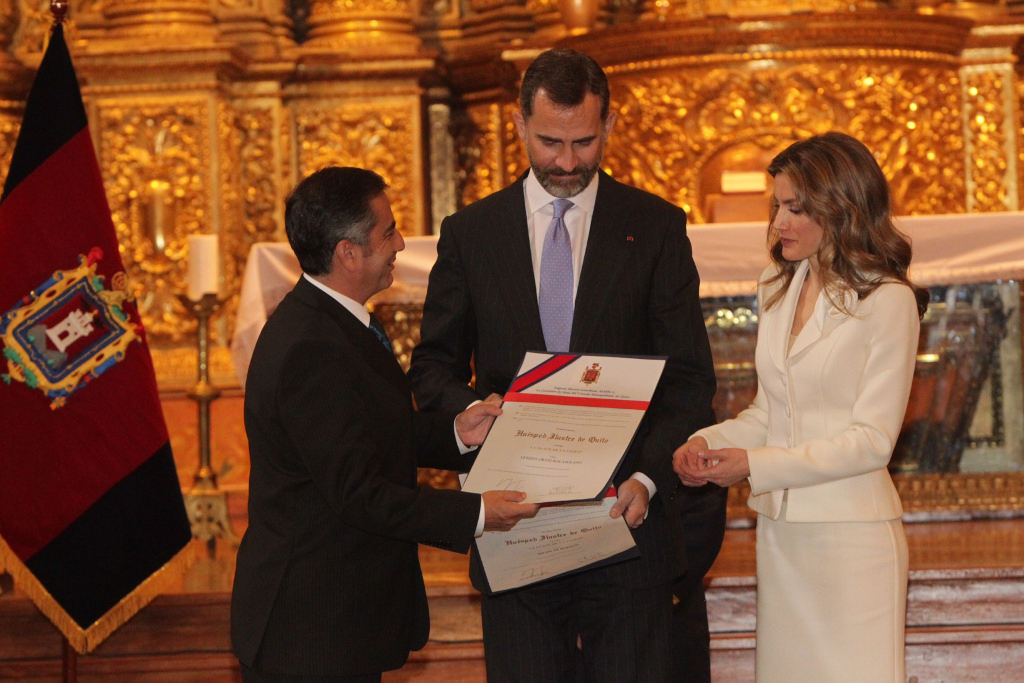
The Prince and Princess of Asturias met with Panamanian President Ricardo Martinelli and his wife Marta Linares de Martinelli. They also attended a gathering of Spanish businesses in Panama.
Their Royal Highnesses highlighted the significant economic bonds between both countries, including Spanish firms participating in the expansion of the Panama Canal and a transit project.
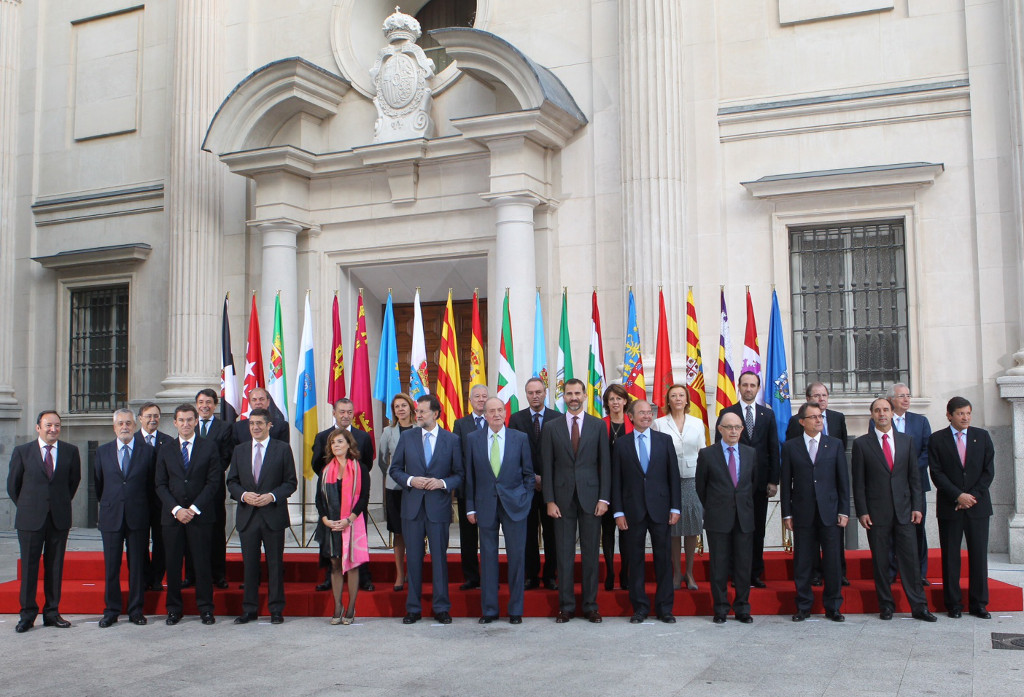
King Juan Carlos and Prince Felipe of Asturias met with leaders of Spain’s autonomous communities at the Spanish Senate building today.
The meeting, of course also attended by Spanish government leaders, including Prime Minister Mariano Rajoy, was especially important because of disagreements about the Spanish budget, funding for the country’s region’s and pro-independence rumblings in Catalonia.
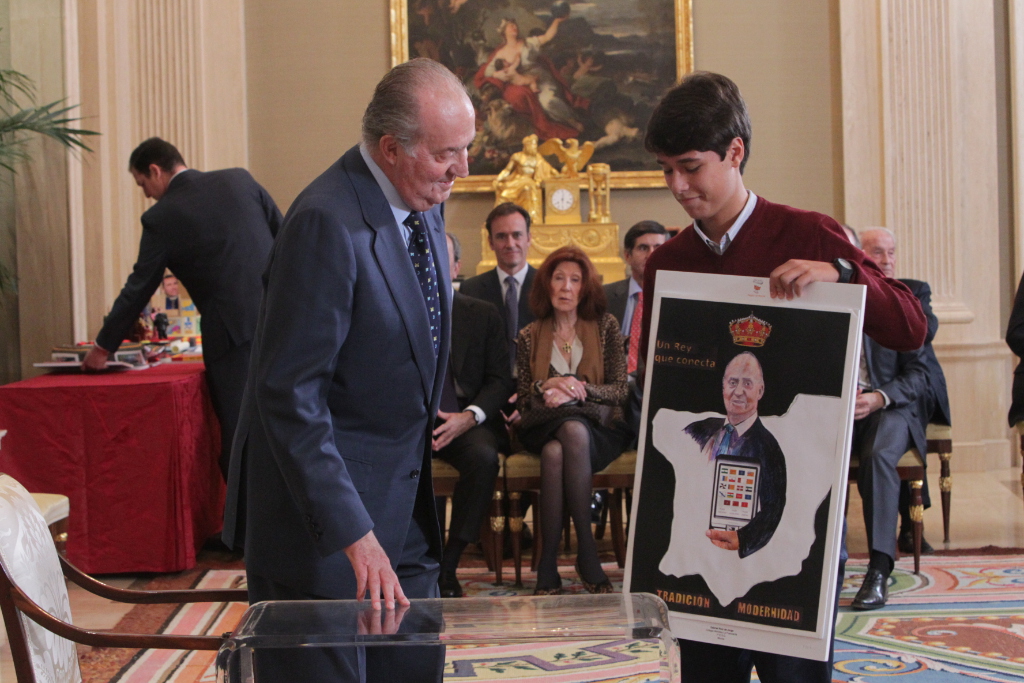
Elsewhere in Madrid, King Juan Carlos gave Nueva Economía Fórum awards to Italian President Giorgio Napolitano and Portuguese President Aníbal António Cavaco Silva, both on behalf of their respective countries.
The Fórum facilitates debate between social, business and political leaders. President Napolitano also met with the King at Zarzuela Palace.
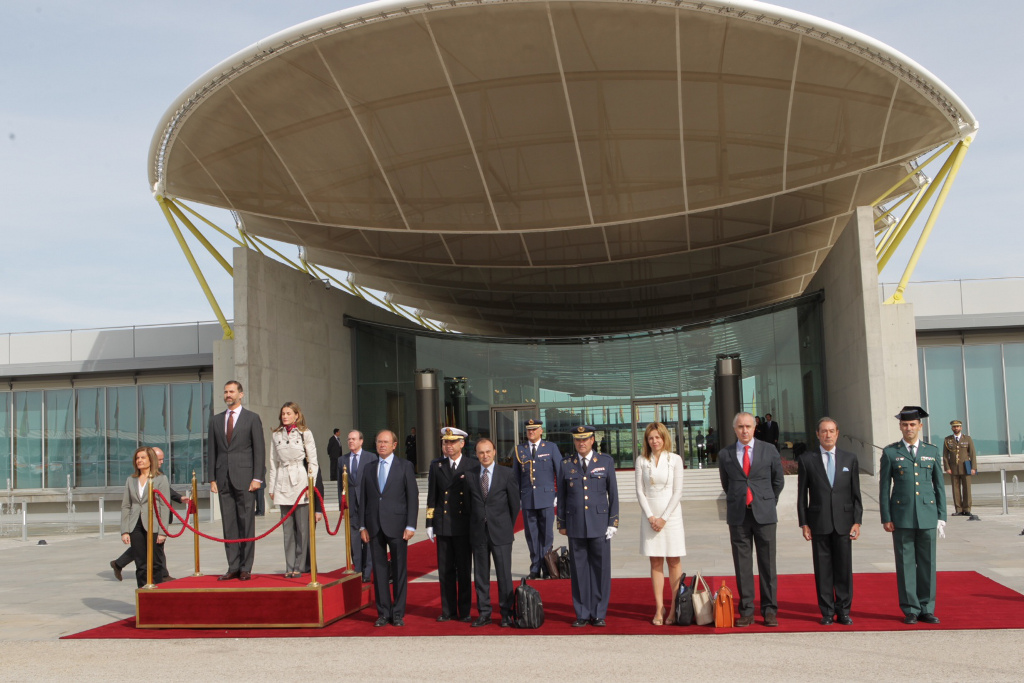
Prince Felipe and Princess Letizia then rushed to the airport for their official visit to Panama. Their agenda includes a visit to the Panama Canal expansion project.
The New York Times and its International Herald Tribune analyzed King Juan Carlos’ place in modern Spain and recent controversies relating to the Monarchy.
The feature contrasted pro-republican feelings, discomfort about the Royal Family’s unknown wealth, the controversial hunting trip to Botswana and the country’s economic troubles with the King’s role as Spain’s top booster.
The Monarch, for example, helped secure a multi-billion dollar high speed rail contract in Saudi Arabia.
The king is widely valued in business circles for acting as a sometime deal maker and economic ambassador for his nation, but how he has amassed his substantial personal wealth remains secret. The Spanish royal family’s wealth has been estimated at up to $2.3 billion, a sum that supporters contend was inflated by the inclusion of government properties.
The King, who was recently in New York, stressed the need to promote Spanish trade as a means to improve the Spanish economy. He also spoke about his own role in the country’s future.
“The monarchy will continue as long as the people want a monarchy,” the king said on a swing through New York last week, part of a palace strategy to meet with top opinion makers to help promote confidence in Spain.
Prince Felipe and Princess Letizia in the Canary Islands.
But while the newspaper described the King as a non-ruling Monarch, it’s important to remember his role in public life, which in many ways goes beyond that of other European royals.
If they’re paying for a Monarchy, people in Spain want its members to do something other than ribbon cutting at events.
While Queen Elizabeth refrains from expressing an opinion about anything, King Juan Carlos, for example, penned a public letter recently expressing his views, albeit indirectly, about Catalonian calls for independence.
The Royal Palace has said such communications will become increasingly common.
King Juan Carlos met with Catalonian President Artur Mas during the Monarch’s trip to Barcelona today.
It was a much anticipated — and in some quarters dreaded — meeting between both men. It comes amid Mas calling for early elections in the Autonomous Community of Catalonia and fanning pro-independence flames.
The King traveled to the Catalonian capital to hand out the Count of Barcelona award to Cardinal Tarcisio Bertone. Count of Barcelona is one of King Juan Carlos’ titles.
His Majesty, who had already released an open letter calling for unity among all Spaniards, expressed optimism about the country’s economic future.
He called the economic and political situation “grave” but said Catalonians and all Spaniards “are capable of overcoming these circumstances.” He also spoke in catalán for good measure.
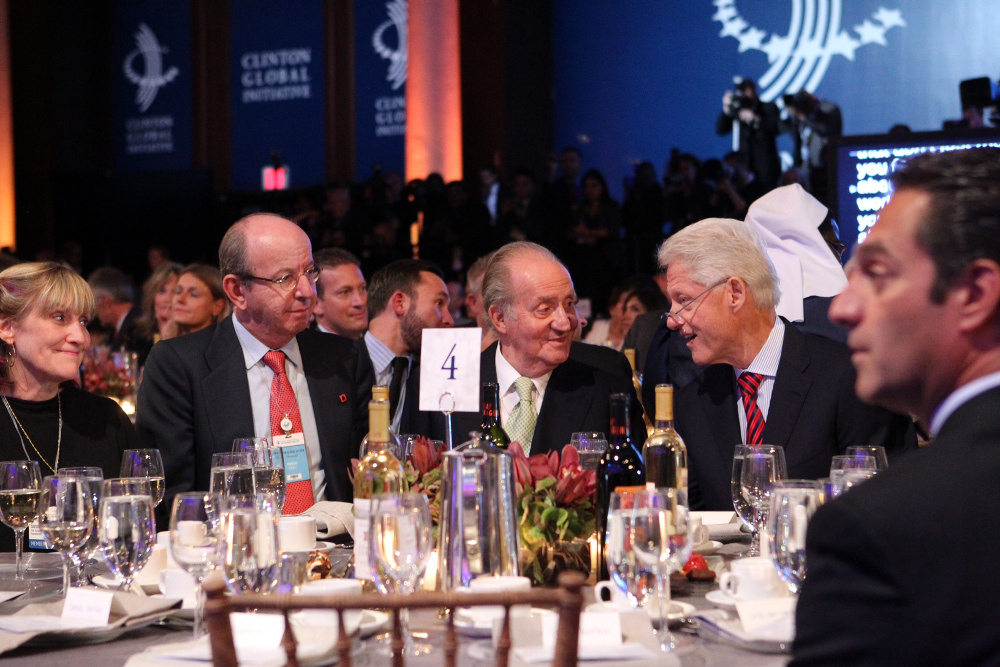
Earlier this week the King was in New York attending the annual meeting of former U.S. President Bill Clinton’s Global Initiative, where he met with other heads of state and world leaders.
King Juan Carlos speaks with former President Bill Clinton.
Meanwhile, members of the Royal Family have resumed a busy agenda. Today, for example, Queen Sofia attended a gathering of backers of the Reina Sofia Museum in Madrid.












 LOS BORBONES