Her Majesty visited the Mexican Red Cross headquarters in Mexico City yesterday and heard about recovery efforts following the recent earthquake there.
The Queen praised the award recipients and said that with learning and innovation “we will continue growing as a country toward a better and more just Spain.”
King Felipe this evening delivered a rare and fiery speech against the Catalan government’s move toward independence from Spain.
The King, who spoke from Zarzuela Palace, called this week’s illegal pro-independence referendum and other developments a threat to “national sovereignty.”
Catalan leaders have been pushing for a legal referendum for years, something the central government has rejected, fearing many people will use the occasion to cast a protest vote over economic and other grievances.
The Catalan leadership is now threatening to declare independence even though polls show most Catalans don’t support the move.
Don Felipe is calling their actions “unacceptable disloyalty,” and against Democracy and the rule of law, reiterating constitutional protections and Catalonia’s Statute of Autonomy.
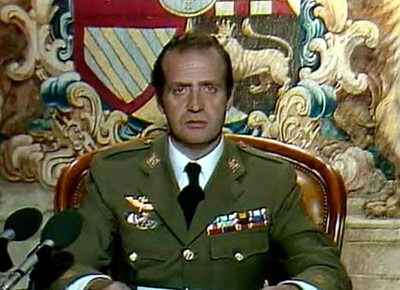
The King’s speech is almost unprecedented. His father, King Juan Carlos, delivered major messages during his abdication and during an attempted coup in the early 1980’s.
King Juan Carlos in 1981.
Left wing and pro-independence parties slammed the speech for not focusing enough on dialogue. The King, however, has pressed for dialogue numerous times before.
“These moments are hard but we will overcome,” said the King, stressing Catalonia would continue being Spanish.
He said the Crown would continue standing by Democracy and the Constitution, and the “unity and permanence of Spain.”
King Felipe once again used his bully pulpit to address the crisis in Catalonia, where pro-independence parties are looking to force a referendum on independence.
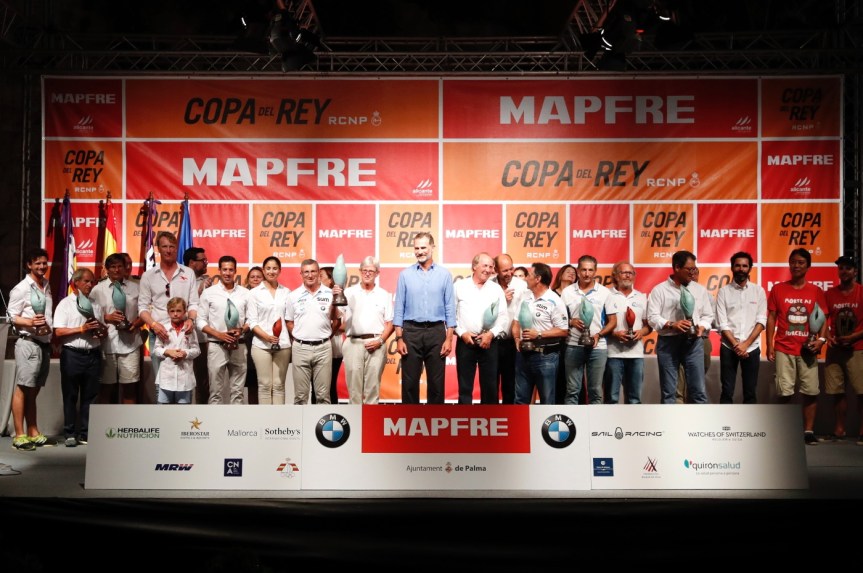
The King, during remarks in recent days at an awards ceremony related to culture, spoke about Spain’s “constitutional democracy” and national “coexistence.”
Don Felipe said the Spanish Constitution would prevail as the guarantor of liberty and progress, and against those who seek to break it.
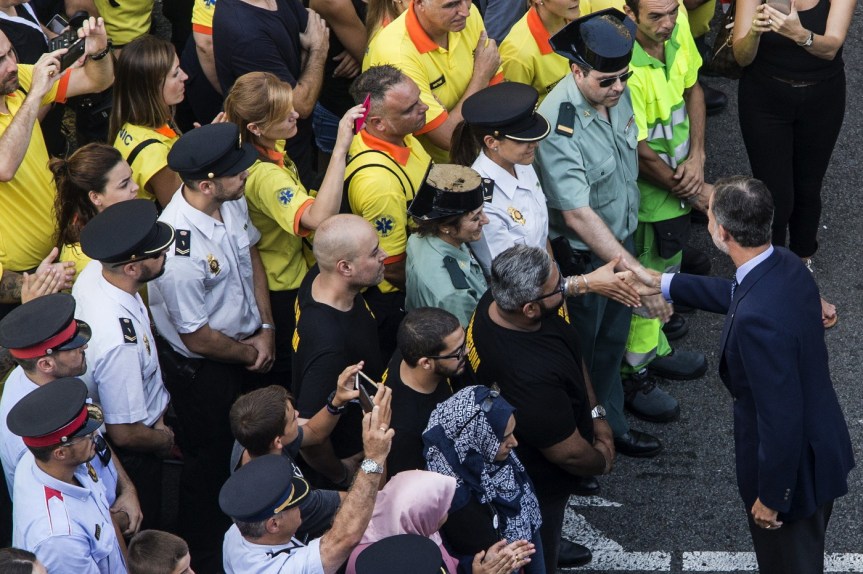
Rescue workers and officials welcomed the King. Some anti-monarchy activists and pacifists, upset about Spain’s export of military weapons, protested his arrival.
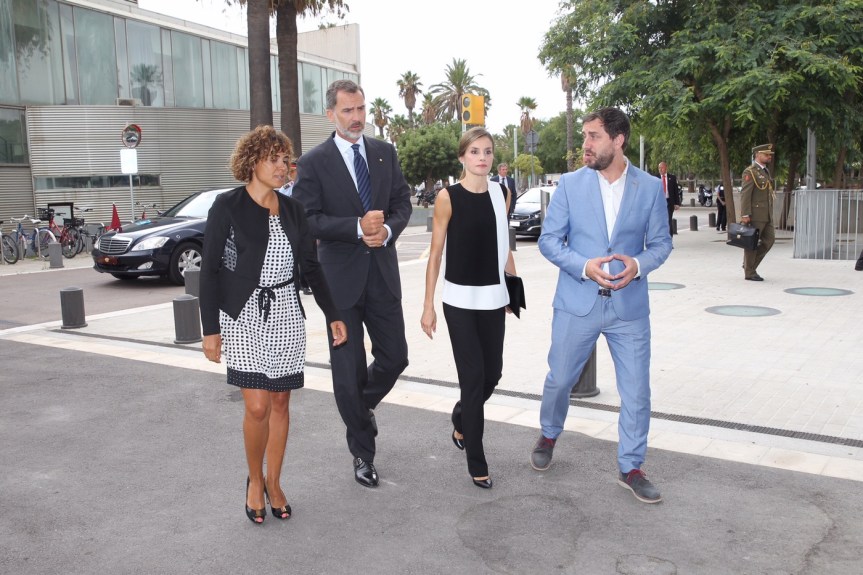
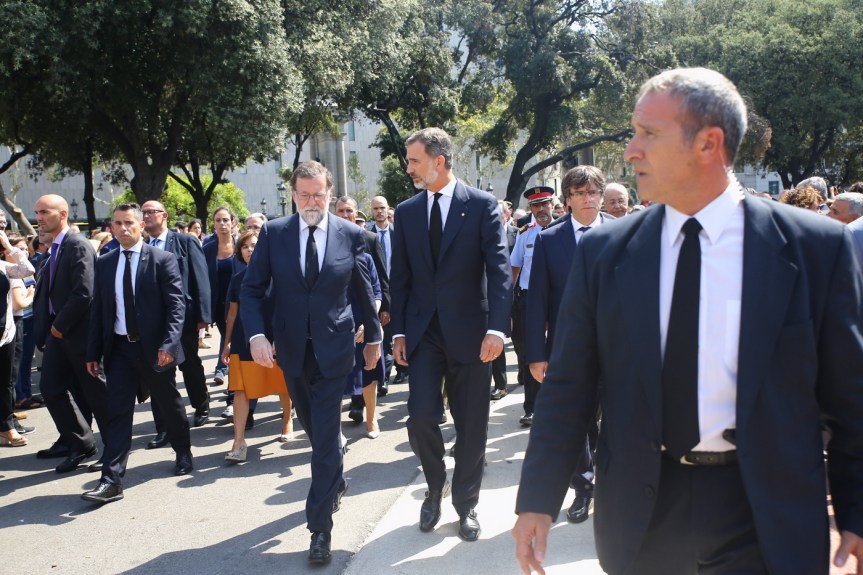
The King has made it a point to visit Barcelona several times since the attack. His presence as a symbol of unity is particularly important amid pro-independence rumblings in the Autonomous Community of Catalonia.
Terrorism is nothing new in Spain and members of the Royal Family. The country has dealt with Basque separatists in the past and the 2004 Madrid train bombings.
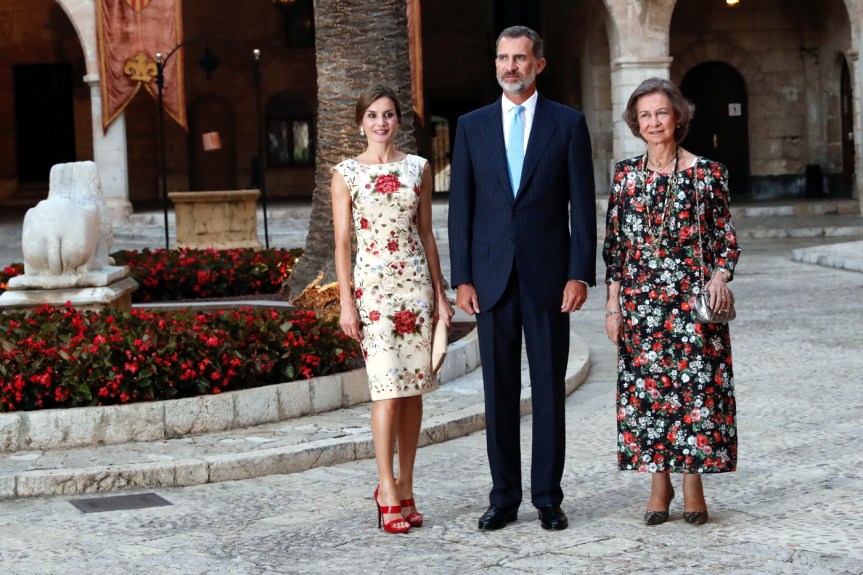
The Royals hold their public meetings at Almudaina Palace, an old Arab fort that became a Spanish royal residence.
Almudaina Palace
However, they have long stayed at Marivent Palace, which belongs to local authorities but is set aside for the family’s use.
Queen Sofia, who spends the most time in Mallorca, often with get grandchildren, is devoted to the place.
It’s unclear how King Felipe and Queen Letizia see Marivent and Mallorca, but continue the tradition, including an annual photo shoot and press meet-and-greet.
Several royals went out to dinner out on the town. King Juan Carlos, however, was spotted in Ireland and is unlikely to stop in Mallorca.
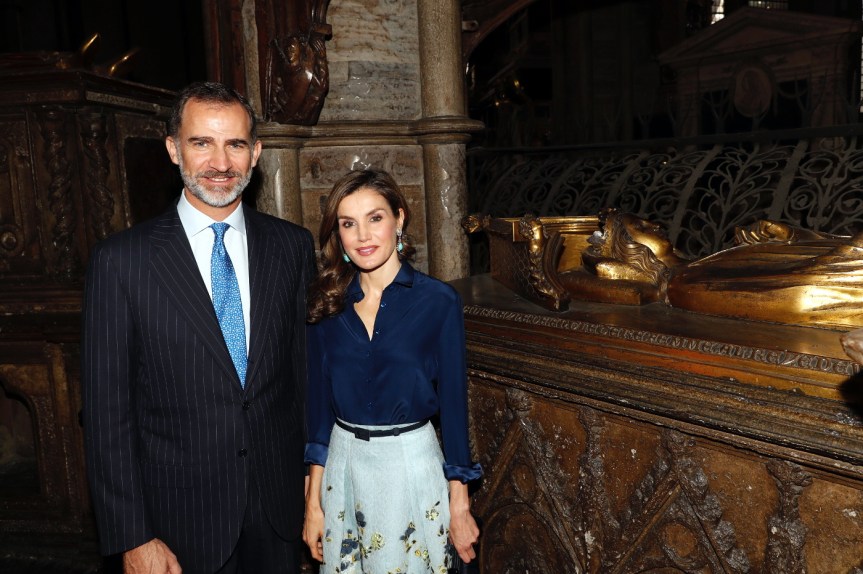
While there, they highlighted the long-standing ties between the U.K. and Spain by visiting the tomb of Eleanor of Castile, once an English queen consort.
There are numerous other ties, including Queen Victoria Eugenie, King Felipe’s great grandmother and Queen Victoria’s granddaughter.











 LOS BORBONES