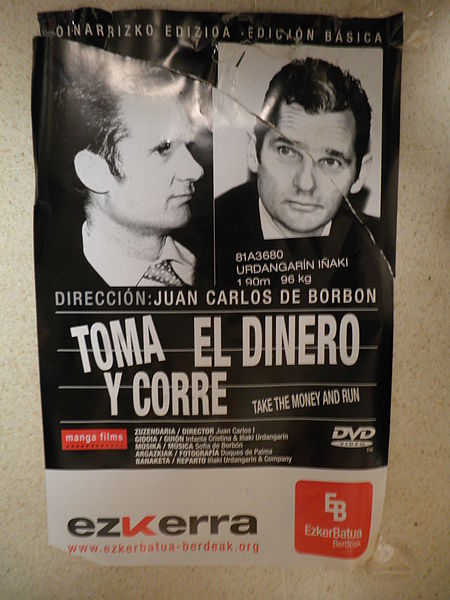
King Juan Carlos’ son-in-law, Iñaki Urdangarin, the Duke of Palma, will be back in court on February 23rd to testify before judge in connection to the ongoing public fraud investigation against him.
Urdangarin testified before a Balearic Islands judge around this time last year. He denies wrongdoing amid accusations that he used a non-profit for personal gain.
El País newspaper also reported that tax authorities accuse the Duke of using a real estate firm that he shared with his wife, Infanta Cristina, as a front to avoid taxes.
Prosecutors say they are not pursuing the King’s daughter.
The Royal Household has worked to distance itself from the scandal, with many Spaniards comparing it to other corruption probes involving the political class.
UPDATE: The Royal Household has removed Urdangarin’s personal profile from its official webpage. It’s evidence of the King and the Prince further distancing themselves from their in-law.
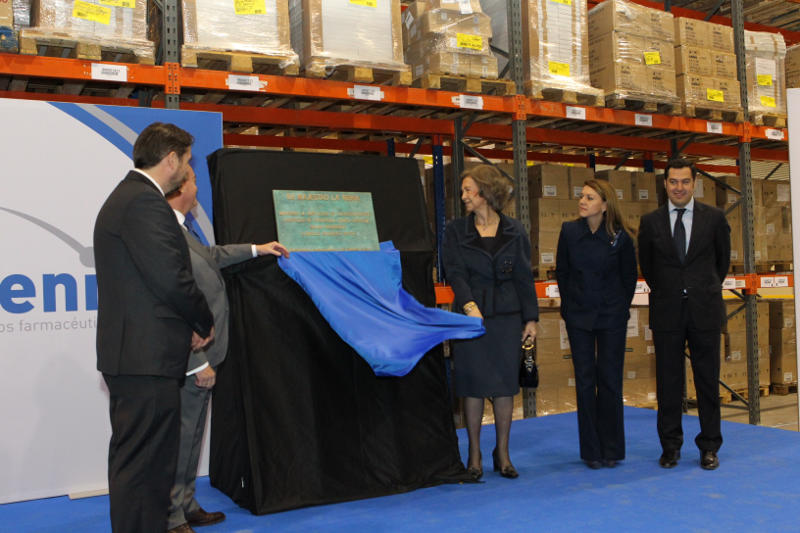
This week the Broseta Foundation awarded Queen Sofia its prize for coexistence. The group touted her social welfare efforts, her support for Democracy and her work for the development of Spain.
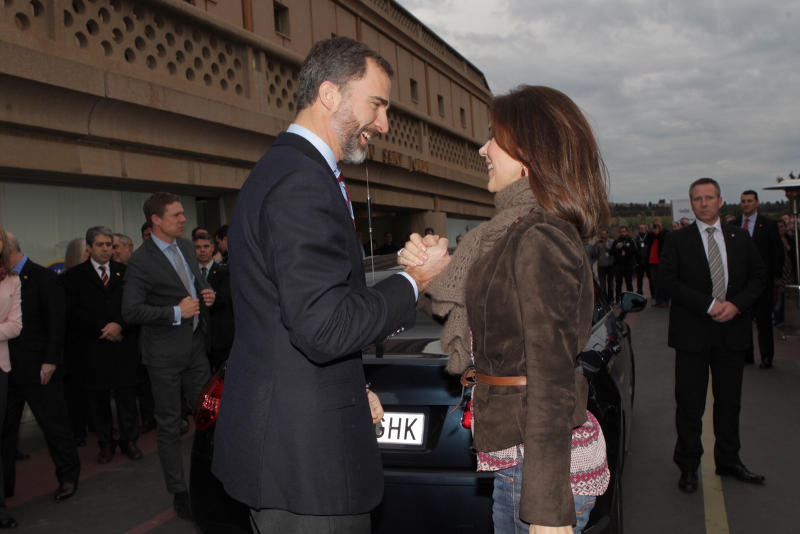
Prince Felipe of Asturias and Girona was in Catalonia today, including Girona, inaugurating the new high speed train connection with France.
The event was much anticipated because it was a chance for the Prince and Spanish Government President Mariano Rajoy to meet with Catalonian president Artur Mas, who has been on an increasingly deepening quest for independence.
Central government representatives used the event to highlight the importance of Catalonia within Spain, and show the train as an investment in the region.
But local officials said it was too little, too late.
Spanish Defense Minister Pedro Morenés alluded to the military’s role amid pro-independence rumblings in Catalonia, saying the armed forces will not respond to provocations and will quietly perform their duty.
The comments are an allusion to concerns that the military may want to violate Democrats institutions and get involved in any political crisis, or prevent secession.
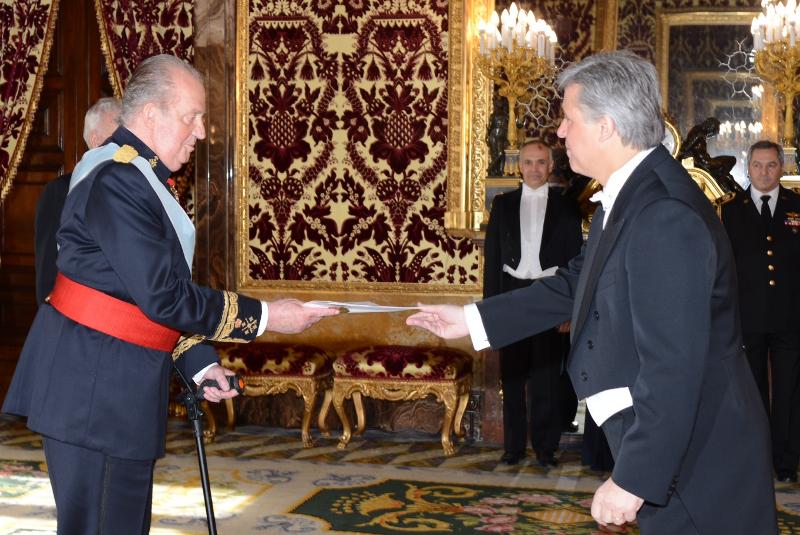
The remarks were part of the “Pascua Militar,” an annual event at the Royal Palace in Madrid where the Royal Family and Spain’s leadership recognize military accomplishments and talk about priorities.
King Juan Carlos thanked members of the armed forces for their work at home, including helping with recent fires, and abroad, including service in Afghanistan. He said the military was also part of improving the country’s economy.
King Juan Carlos rejected any suggestion of possible abdication during an interview on Spanish Television tonight marking his 75th birthday tomorrow.
The King said, “I am doing well and wish to continue” with the duties of Head of State.
Asked about his legacy, His Majesty said,” I don’t like to talk about myself.” But expressed pride in having helped unite “all Spaniards” and accomplished his duty to restore Democracy and the Crown.
King Juan Carlos and Queen Sofia with U.S. President Ronald Reagan and First Lady Nancy Reagan.
Of course, Spain remains divided, especially with regions like Catalonia discussing whether to seek independence. The King reiterated his distaste for the politics of “intransigence” and division.
He called the current generation one “of liberty,” but said Spain still had to work on becoming a more equal and fair society. He wants the country to be united behind “one future and one idea.”
“To me it hurts me a lot,” the King said about people having to leave Spain to find work amid a tough recession.
The interview was never expected to generate controversy of bring about tough questions. Still, commentators quickly said it could have been less formal, allowing for the King’s jovial personality to come through.
The interview is also an effort to restore the Monarchy’s reputation among many Spaniards, especially in communities like Catalonia and the Basque Country.
Basque politicians recently removed a picture of the King from a town hall. And a Catalonian community is removing his name from a roadway.
Beyond Republican and pro-independence tendencies, critics see the King as being too close to former dictator Franco.
Don Juan Carlos, however, was a main force behind the transition to democracy in the 1970’s and 80’s.
UPDATE: The Spanish Royal Mint is releasing a coin to mark the King’s 75 years.
The magazine ¡HOLA! has been keeping an eye on the Spanish Royals and their Holiday comings and goings.
They recently spotted Infanta Cristina and her sister Infanta Elena with their children at El Prado Museum in Madrid. Also with them, according to the magazine, was Prince Kyril of Bulgaria, a family friend.
¡HOLA! noted how happy Infanta Cristina looks despite her recent troubles, mainly her husband’s ongoing corruption investigation.
The magazine earlier this month caught members of the Royal Family, including Queen Sofia and Princess Letizia, at the theater in Madrid.
¡HOLA! noted that it was the first time that Infanta Cristina, the Duchess of Palma, and Princess Letizia, the Princess of Asturias, are photographed together in many months.
The corruption issue has reportedly divided them. Letizia and her husband, Prince Felipe, the future King and Queen, are concerned about its effects on the Monarchy as an institution.
King Juan Carlos called for unity and confidence during his Christmas Eve message, an annual tradition that allows the Monarch to speak at length about ongoing problems.
This year’s speech from his office at Zarzuela Palace was notable because it comes amid a secessionist push in Catalonia, ongoing Basque nationalism and a troubled economy.
It’s also the first year the King’s Christmas message is broadcast on YouTube and available in the different languages under the Spanish Crown.
The King said these were “among the toughest moments in recent Spanish history.” Speaking about the economy and politics, he said, “We cannot ignore than pessimism exists.”
Amid ongoing concerns about layoffs and spending cuts, the King said, “Austerity and growth must be compatible.”
Recalling the many tough times lived by Spaniards in the past, he added, “The first stimulus that will get us out of this crisis is confidence.”
His Majesty, treading carefully around the secession issue, he called on politicians to seek policies that unite rather than divide.
Amid concerns about the viability of the Spanish state as it currently stands, King Juan Carlos called Spain a “great nation” that must be part of global solution to economic and social concerns.
The King recognized the plurality of languages, cultures and traditions that have coexisted within Spain for centuries.
“Its necessary to promote values like mutual respect and reciprocal loyalty,” he said, hoping that politicians “do what’s possible to close open wounds.”