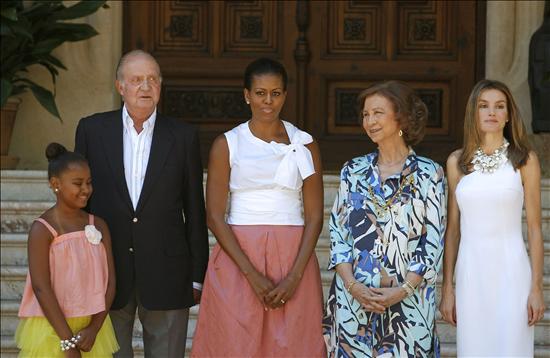
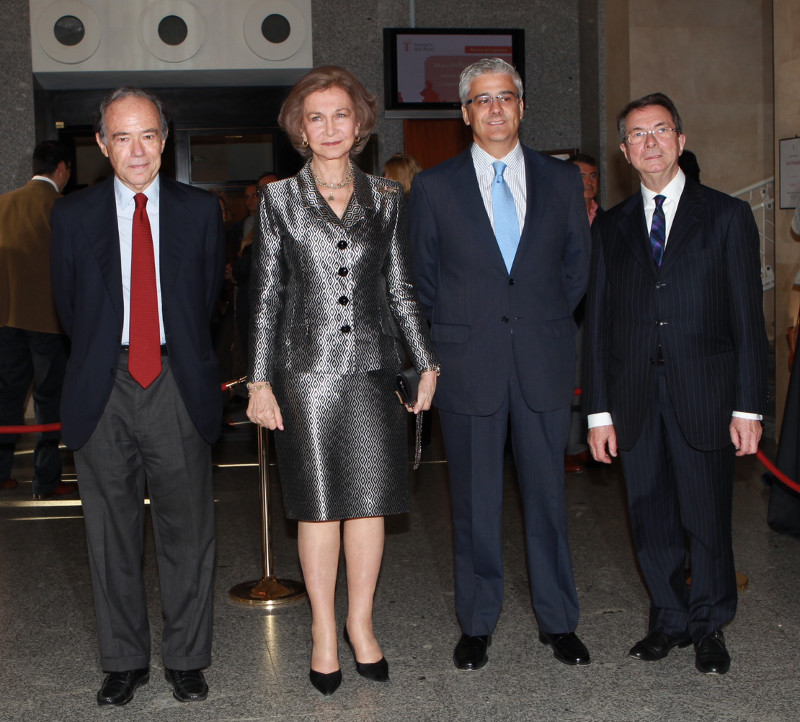
Members of the Royal Family, the King’s extended family and aides celebrated yesterday the 100th anniversary of the birth of Don Juan de Borbón, the Count of Barcelona.
The Count of Barcelona, son of King Alfonso XIII and Queen Victoria Eugenia, was technically next in line for the throne but never reigned.
Soon after dictator Francisco Franco picked King Juan Carlos as his successor, Don Juan resigned his dynastic rights in favor of his son, but only after knowing Spain would make a return to Democracy.
King Juan Carlos and his family have a number of Royal Palaces, sites and homes at their disposition.
In practice, however, they only use a fraction of them on a regular basis, and mostly for official occasions. Below is a non-exhaustive list:
Photo by Manuel Quinones.
The Madrid Royal Palace, above, is the King’s official residence and site for the most important state gatherings.
It has a large dining room, numerous works of art, an armory with historic weapons belonging to members of the Royal Family, and the official Throne Room.
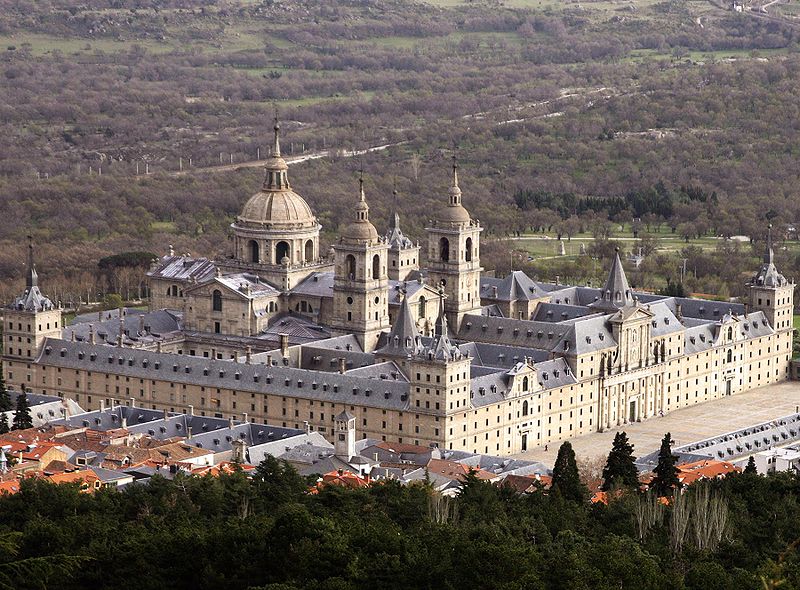
Royal Site of San Lorenzo del Escorial.
The Royal Site of San Lorenzo del Escorial is a large palace and monastery in the Madrid region, which includes a tapestry museum, a library, a basilica and the official burial place for members of the Spanish Royal Family.
On the grounds is a small house called La Casita del Principe for the Prince of Asturias, the heir to the Spanish throne.
Nearby is the Valley of the Fallen, resting place for former Dictator Francisco Franco.
Prince Felipe and his wife Princess Letizia, however, currently live in a newly built small palace often called the Prince’s Pavilion, pictured below.
The Prince’s house is a short drive from Zarzuela Palace, where King Juan Carlos and Queen Sofia have lived for several decades.
Former Franco rehabilitated Zarzuela, an old royal hunting lodge, for the young couple. They moved in in shortly after their wedding in Athens, when their future as heirs to the Spanish throne was still uncertain.
Welcoming guests at Zarzuela Palace.
The King and other members of the Royal Family often receive informal visits at Zarzuela, which is equipped with communications capabilities and contains Royal Household offices in support of the Monarch as the Head of State.
The King’s dispatch is at Zarzuela with his official Royal Standard flying above. Queen Sofia’s sister, Princess Irene of Greece, also lives on the site.
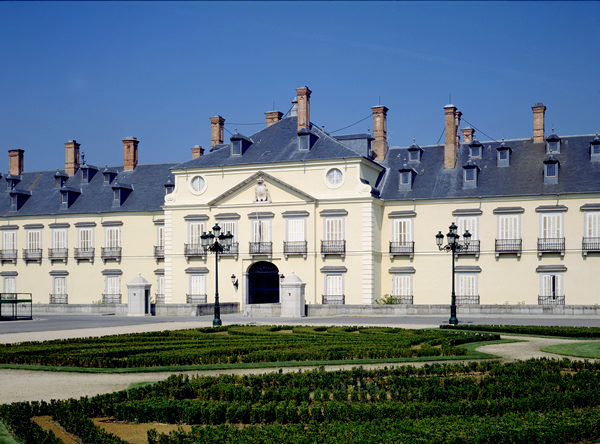
The Zarzuela Palace, also outside of central Madrid, is in the grounds of El Pardo Palace, pictured above. Franco used to live at El Pardo, which now includes reception rooms and apartments for guests.
Most Royal Palaces and sites, which include monasteries and gardens, are owned by the state and run by Patrimonio Nacional or National Heritage.
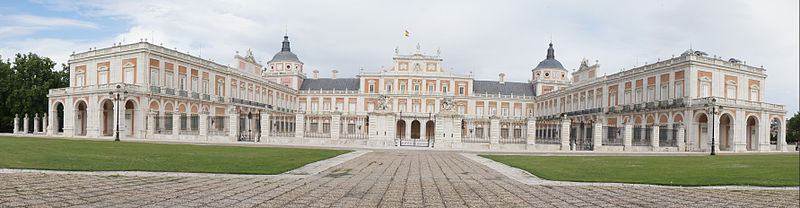
Also in the Madrid region, but to the south, is the Royal Palace of Aranjuez, pictured below.
Several Royal sites are located in the Segovia area, north of Madrid.
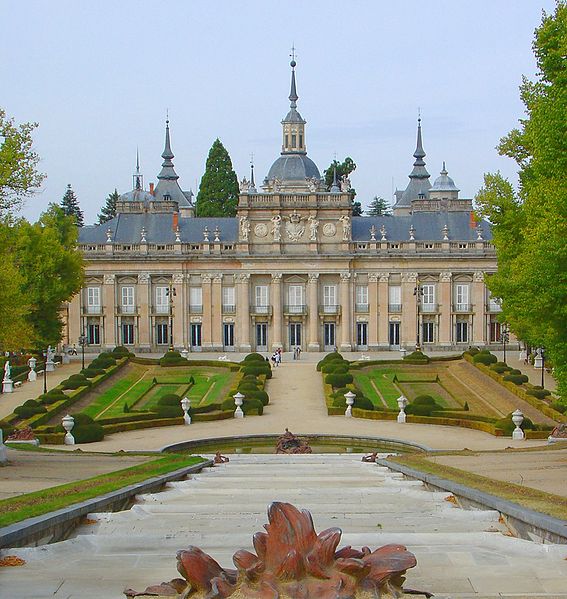
The Gardens of La Granja de San Idelfonso, above, extend more then 1,000 acres. The Riofrio Palace, below, was built for Queen Elisabeth Farnese in the 1700’s but has generally been barely used.
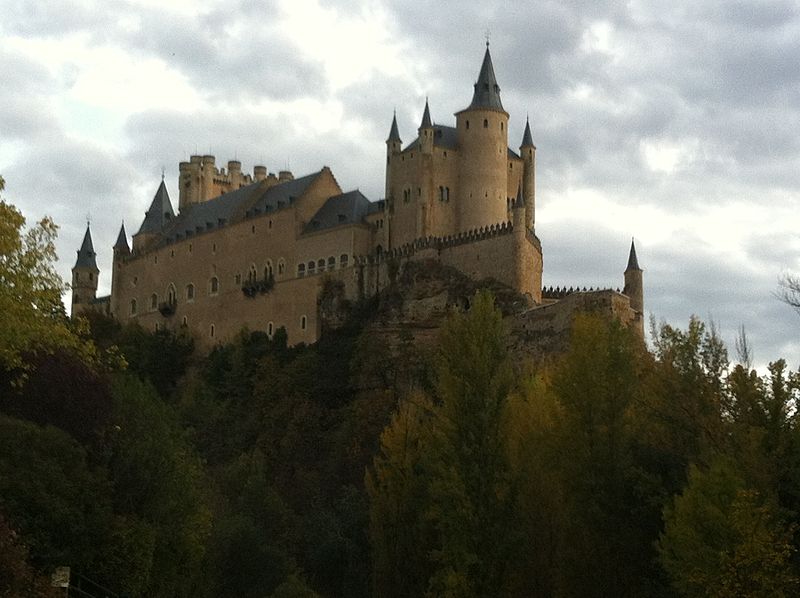
Also in Segovia is the Alcazar de Segovia, which was used by Queen Isabella of Castile. It is run by a patronage and one of several castles that were once royal homes are now museums.
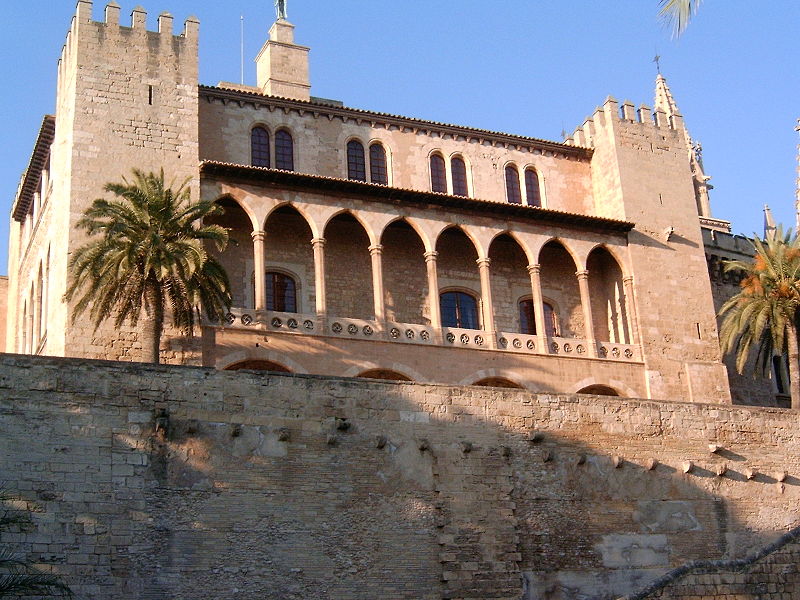
The King’s official residence in Barcelona is owned by the local government. The same goes for the Royal Family’s summer residence in the Balearic Islands, Marivent Palace in Palma de Mallorca.
Price Naruhito, the heir to the Japanese Imperial Throne, met with Prince Felipe of Asturias today at El Pardo Palace in Madrid for a visit to commemorate the 400th anniversary of Hispano-Japanese relations.
Members of the Spanish Royal Family and members of the Japanese Imperial Family have traveled to each other’s country over the years.
King Juan Carlos and Queen Sofia went on a state visit to Japan in 2008, for example. And Prince Naruhito went to Barcelona for the Olympics and to Madrid for Prince Felipe’s wedding to Princess Letizia in 2004.
His Majesty joined Queen Sofia, Prince Felipe and Princess Leizia at a downtown Madrid ceremony for Armed Forces Day and in remembrance of Spain’s fallen service members.
People shouldn’t be surprised, however. During the transition to Democracy, King Juan Carlos and Queen Sofia were often greeted with jeers and screams, especially in places like Catalonia and the Basque Country.
In recent days King Juan Carlos has met with Austrian Chancellor Werner Feymann and Guatemalan President José Mujica.
A small meal for President Mujica at Zarzuela Palace.
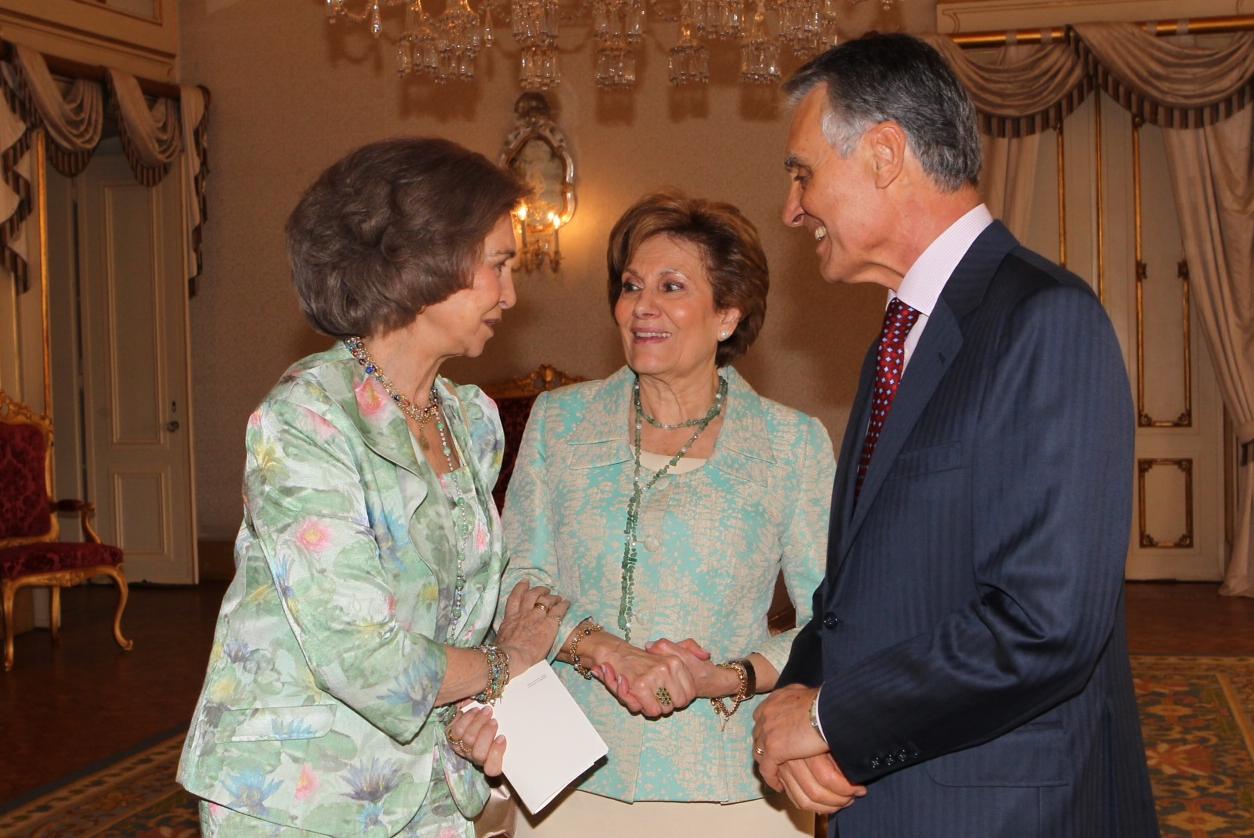
“The protection of infancy, of all children, should be constitutional to the principles and values of any society and human collective,” Her Majesty said in Lisbon.
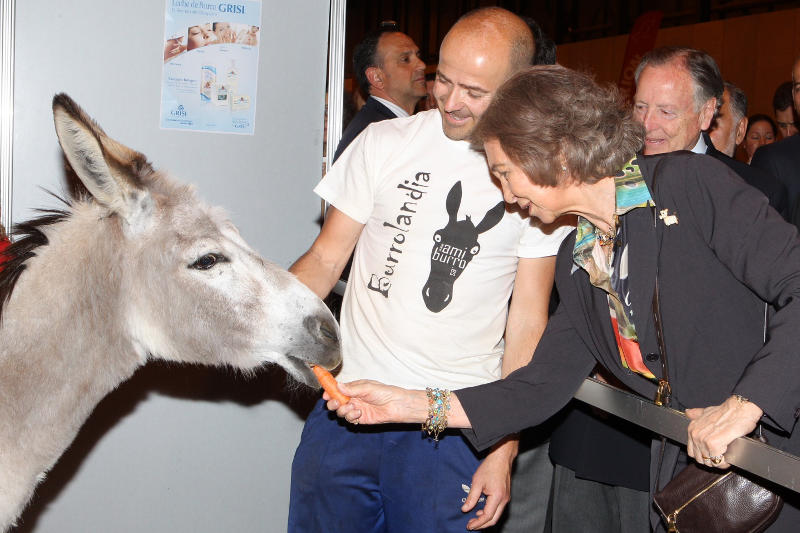
Also over the weekend Queen Sofia, known for her love of animals, assisted the annal expo organized by the Royal Spanish Canine Society.
Queen Sofia feeding a burro.
Prince Felipe
Last week Prince Felipe was in Ecuador for the swearing-in of President Rafael Correa.
Prince Felipe of Asturias has for years been tasked with attending such events at Latin American countries, as a means of stretching ties between Ibero-American leaders and the heir to the Spanish throne.
However, while Don Felipe assisted the funeral of the late Venezuelan President Hugo Chavez, he did not attend the presidential inauguration amid controversy over election results.
King Juan Carlos
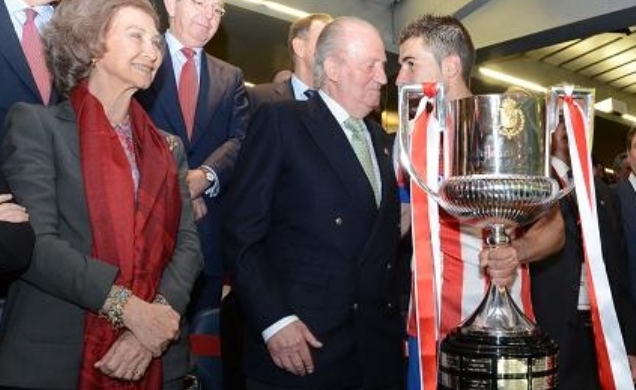
King Juan Carlos is back to public events after his recent operation. Earlier this month, for example, he attended the final game of the soccer King’s Cup at the fames Santiago Bernabéu stadium.
Clinton also met with Prince Felipe, while both attended the summit at Madrid’s European University.
His Royal Highness said, “Governments and public institutions have the responsibility to create policies that favor stable job creation.”
Prince Felipe and President Clinton at the summit.
Don Felipe added, “Universities and educational centers must mold youth so they have the skills necessary to get jobs, and companies should offer opportunities for professional growth.”
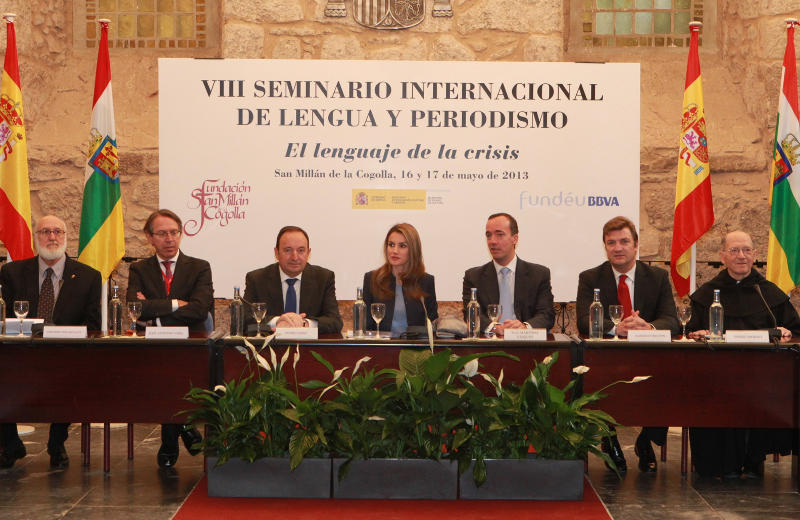
Princess Letizia of Asturias is making news from her analysis of language during Spain’s tough financial condition.
During a journalism and language conference yesterday, Her Royal Highness said, “the crisis has its own language and its utilization can be intentional.”
She continued, “It’s not the same to say help and rescue, recession for negative growth or restructuring instead of cuts.”
Members of the Spanish Royal Family has been active in looking for new economic opportunities and pressing political leaders to focus on economic growth.
Prince Felipe, during a recent summit of engineers, called on the profession to help promote economic growth.
The Royal agenda has been relatively full in recent weeks with numerous visits and receptions at Zarzuela Palace and around the country.
Queen Sofia at the Royal Theater in Madrid this week.Infanta Elena at Valencia’s Cavalry Armory.
A court in Palma de Mallorca overturned today a recent subpoena against King Juan Carlos’ daughter Infanta Cristina in connection with her husband’s corruption investigation.
Judge José Castro, investigating allegations that Duke of Palma Iñaki Urdangarin used a non-profit company to line his pockets with government contracts, subpoenaed Infanta Cristina in April.
However, prosecutors appealed his decision citing lack of evidence.
Meanwhile, other members of the Royal Family are continuing with a busy schedule in part to rehabilitate the Crown’s image.
King Juan Carlos called on political leaders to find consensus on Spain’s challenges, particularly the economy and sky-high unemployment.
His Majesty, who has been recovering from an operation, also invited television cameras into his office this month to become more visible amid sagging poll numbers.
King Juan Carlos meeting with Equatorial Guinea foreign minister.
Spain’s statistics agency found in new research that Spaniards are increasingly concerned about the role of their monarchy.
The Crown has also gone down in ranking among the country’s esteemed institutions, something that has worried government officials and led Spanish Television to air stories on the King’s role in fomenting Democracy.
Media outlets reported that Don Juan Carlos will reduce his international activities to focus on domestic issues. He said he wants to have more meetings with business and community leaders.